


Market Snapshot - May 2026
Canada & Greater Toronto Area
Commercial Real Estate Market Report
Q2 2026 | May 2026 Edition
Prepared by: Mel Giannone, Paramount Real Estate Properties Inc.
Market Focus: Greater Toronto Area (GTA)
Asset Coverage: Residential, Multifamily Rental, Office, Industrial, Retail, Land
EXECUTIVE SUMMARY
Over the past several years, the real estate environment has changed rapidly and, in many cases, dramatically. Market conditions, regulation, technology, public expectations, and professional scrutiny are all evolving at once. High household leverage, weak productivity, slowing population growth, and ongoing geopolitical uncertainty continue to create a fragile economic environment across Canada.
• Residential housing remains slow and negotiation-driven as affordability, job security and confidence in the economy continue to weigh on buyers.
• Multifamily rental markets are softening in the short term as supply rises and population growth slows.
• Office markets continue to stabilize, with premium downtown assets outperforming lower-quality buildings.
• Industrial markets are rebalancing as leasing conditions normalize and tenants regain negotiating leverage.
• Retail remains resilient due to limited supply, changing socio-economic perspectives and strong demand for necessity-based space.
• Investment activity is improving selectively, with capital targeting durable income and high-quality assets first and then deeply discounted distressed assets next.
This report provides a sector-by-sector assessment of current conditions and outlines strategic considerations for investors, landlords, and occupiers.
1. Macroeconomic Overview
1.1 Labour Market Conditions
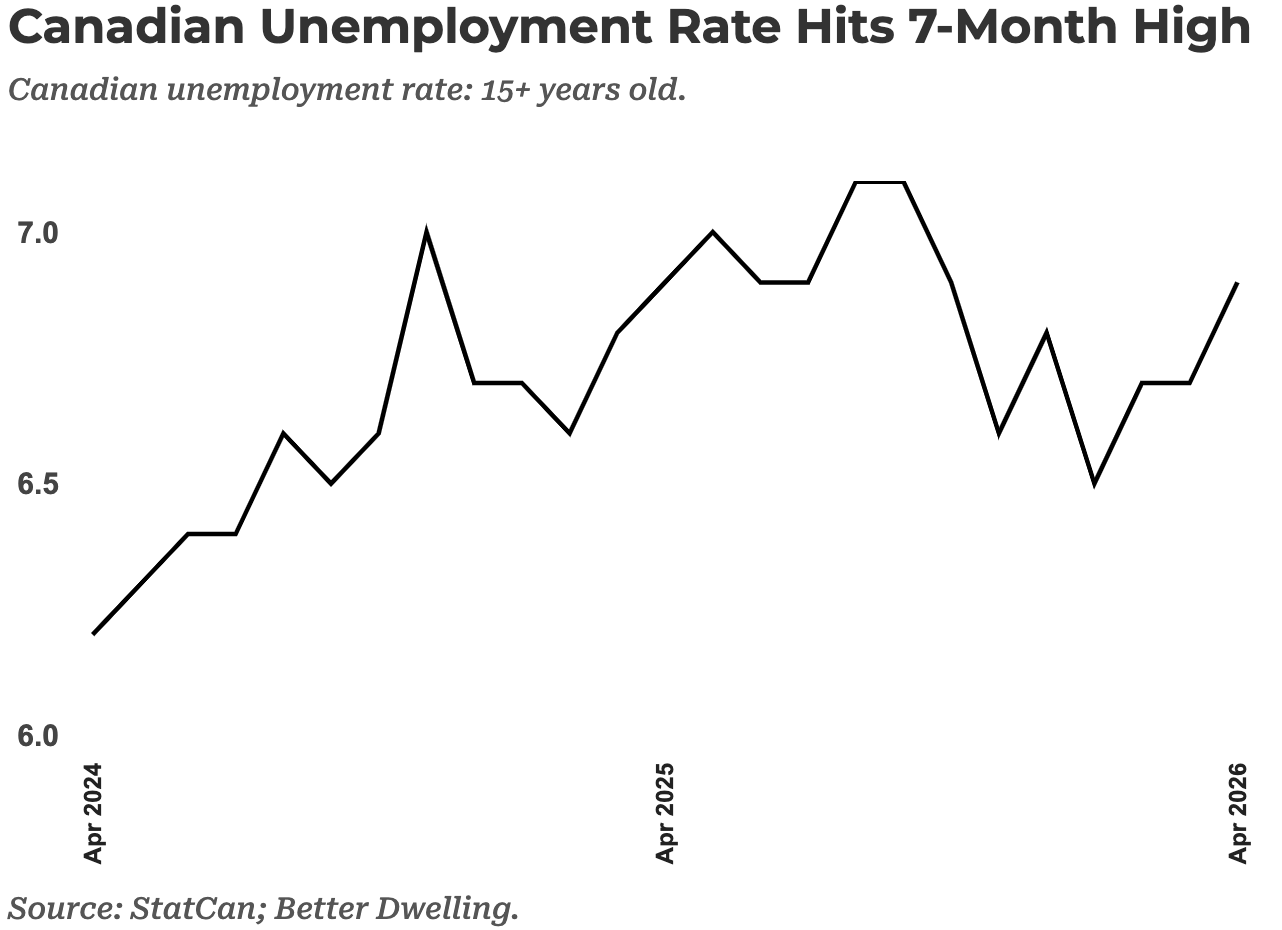
Canada’s labour market weakened further through the first four months of 2026. The economy lost more than 100,000 jobs nationally, largely concentrated in manufacturing and wholesale trade. Unemployment rose to 6.9 percent, while private-sector hiring remained sluggish. Ontario has performed somewhat better than the rest of Canada, but the broader trend remains cautious.The latest labour force survey from Statistics Canada reveals a weak job market, with a workforce that continues to outpace job creation.
Consumers are under pressure. Consumer insolvency filings in Ontario climbed to its highest monthly volume since 2010, just at the tail end of the Global Financial Crisis.41% of Canadians report being $200 or less from insolvency at the end of each month.Canada’s debt-to-disposable-income ratio stands at about 176% - not good. Younger Canadians are being hit especially hard, with youth unemployment climbing above 14 percent.
Demographic trends are adding another layer of pressure. Canada’s labour force participation rate has fallen to its lowest level since the late 1990s outside the pandemic period, driven by retirements and slower immigration growth.
For real estate, this points to softer housing demand, slower leasing activity, and more selective capital deployment. The broader economy is still growing, but momentum has clearly weakened.
1.2 Inflation and Monetary Policy
The Bank of Canada continues to hold its overnight rate at 2.25 percent as policymakers balance weakening economic growth against rising inflation risks tied to global energy markets. Oil prices surged following escalating conflict in the Middle East, pushing bond yields higher and increasing pressure on fixed borrowing costs.
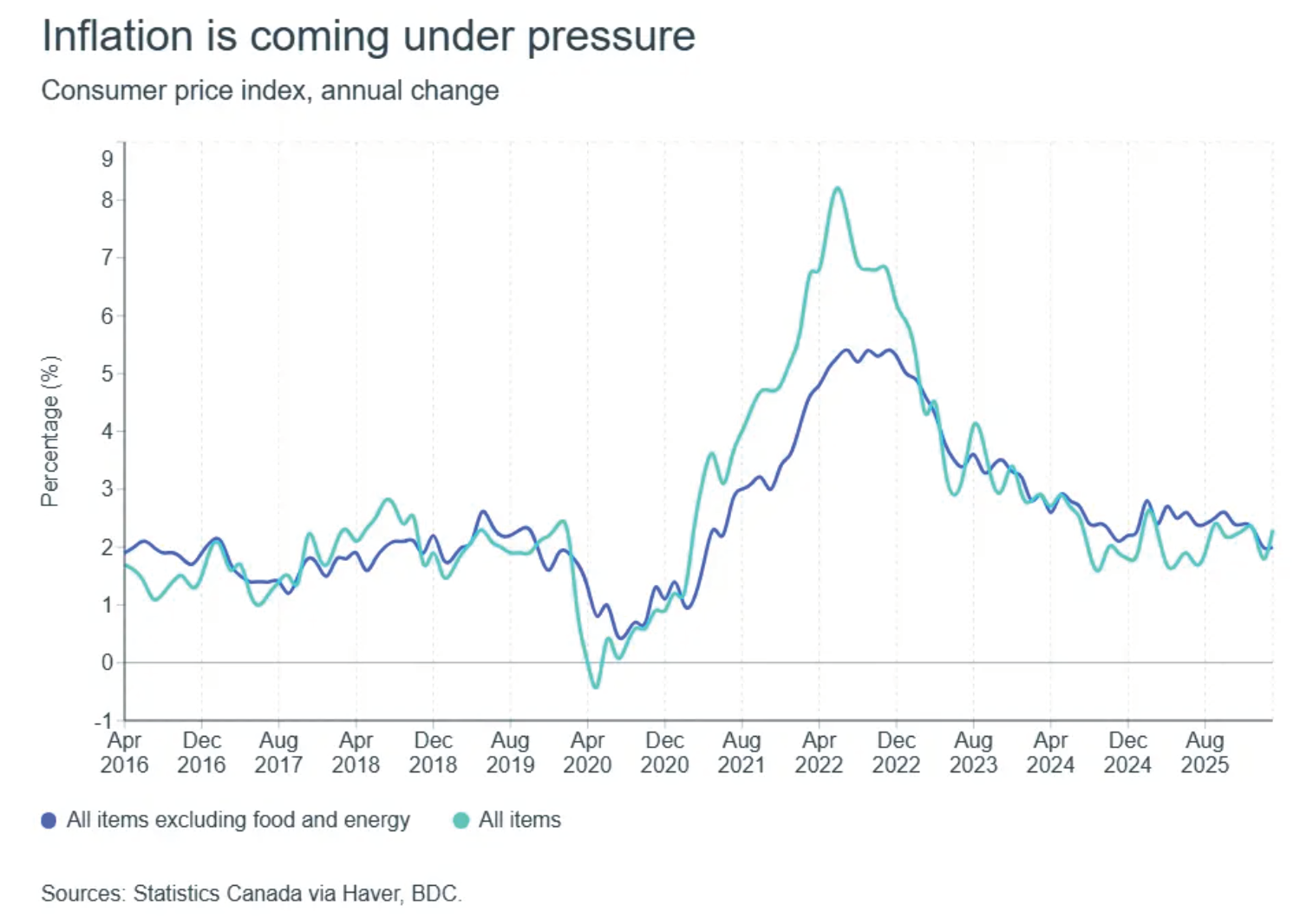
Current inflation for April sits at 2.8 percent, no longer being driven primarily by domestic demand. Instead, it’s a supply-side problem stemming from geopolitical risks, energy constraints, and global supply chain disruptions for commodities such as fertilizer that are becoming the dominant forces.Keep an eye out for inflation in food products imported from abroad to further drive-up food costs in Canada’s CPI by H2 2026.
As investors reprice inflation risk, government bond yields move higher, directly impacting fixed-rate lending benchmarks such as Government of Canada (GoC) bonds. Central banks around the world responded by reinforcing a more cautious, “higher-for-longer” stance, delaying anticipated rate cuts and maintaining restrictive monetary policy.Unless the U.S. Fed lowers rates, Canadian Bond Yields will rise with ongoing geopolitical uncertainty and ultimately affect Mortgage Rates upward.
For real estate markets, uncertainty remains the defining challenge. Variable-rate borrowers are seeing stability for now, but fixed-rate financing has become more volatile again.
2. GTA Asset Class Analysis
2.1 Residential Housing Market
The GTA housing market remains cautious and negotiation-driven. Buyers are still concerned about job security, inflation, interest rates, and geopolitical uncertainty. While sales activity improved modestly this spring, overall confidence remains fragile.The urgency that defined the market a few years back is largely gone. What’s replaced it is a kind of collective hesitation, with buyers and sellers both waiting for someone else to move first.
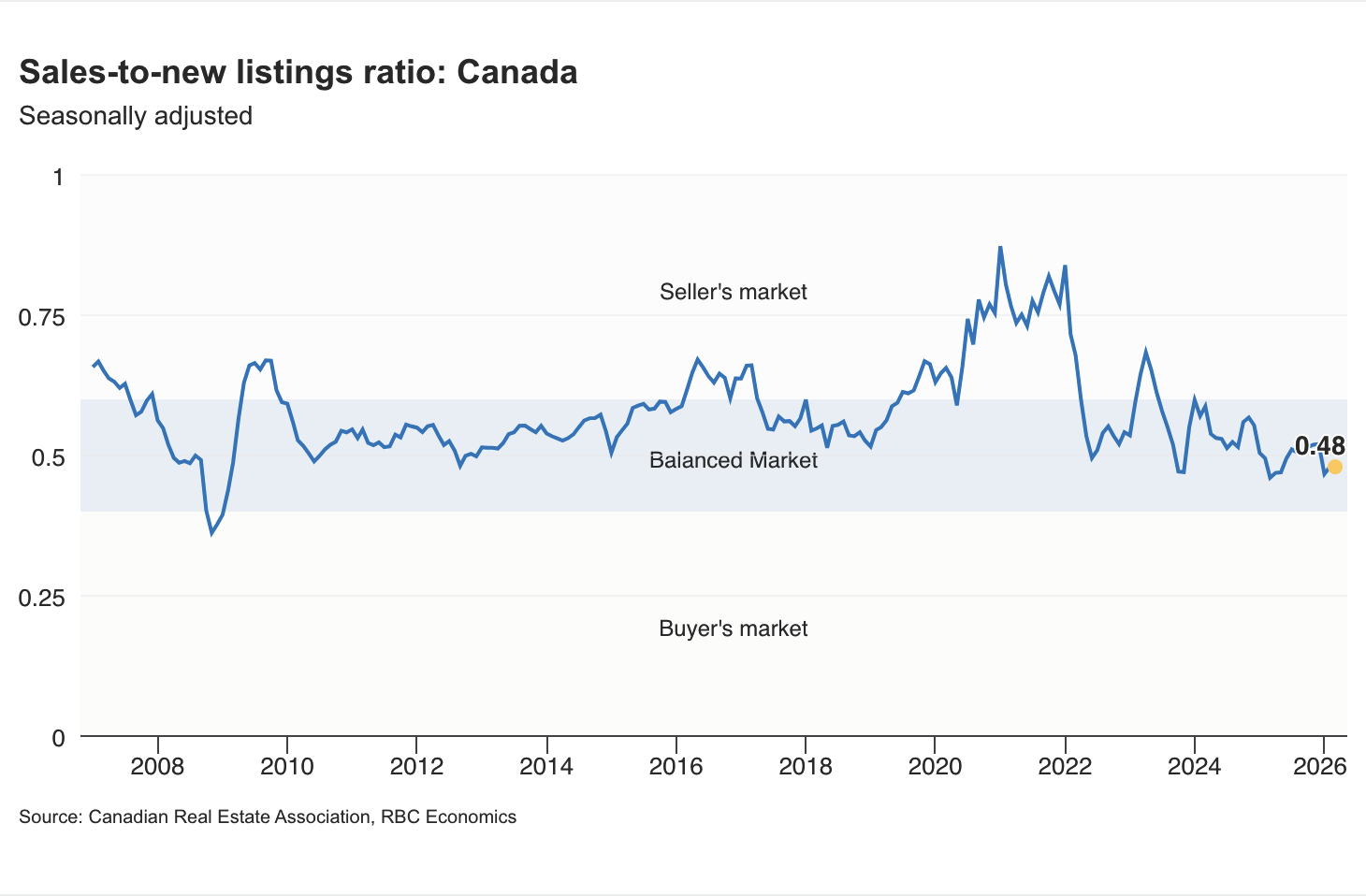
Home sales increased on a year-over-year basis in April 2026, by 7%, while the supply of listings trended lower by 9.3%. The sales-to-new-listings ratio climbed from 30% to 35%. This suggests that overall market conditions in the Greater Toronto Area (GTA) tightened during the first full month of spring. Despite tighter market conditions, selling prices edged lower on average compared to last year, as buyers continued to benefit from ample choice and negotiating power.The average price of a home in the GTA, at $1,051,969, is down 4.9% compared to April 2025.
On a more positive note, new single-family home sales in Q1 2026, across the Greater Toronto Area, are up 56% year-over year according to Altus Group and CMHC data.The Greater Golden Horseshoe Region recorded a 21% increase.Could builder discounts and incentives coupled with a cyclical spring market have had an effect on activity?
CMHC warns that homebuilders will continue facing headwinds from high costs, weak demand, and unsold inventory, with new construction expected to decline through 2028.
The condo story in Toronto, is improving slightly, but too much supply came online at the same time, and so it will take time to absorb. Investors in those segments should plan for continued softness well into 2027.
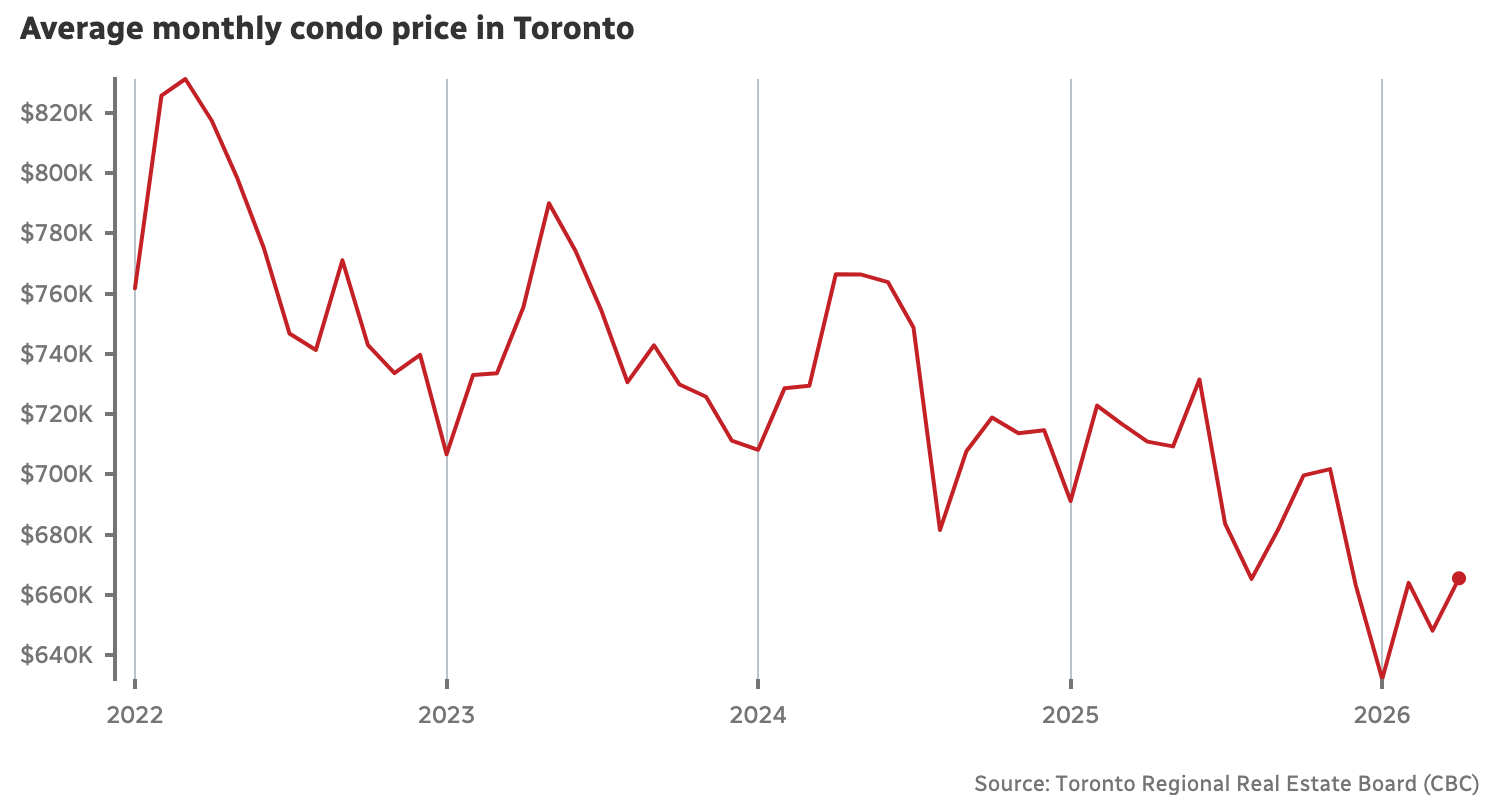
We’re 4 years into the price correction in the resale GTA condo market, marking the longest downturn the region has faced since the late-80s to mid-90s slump. That period of weakness spanned about 7 years before prices began to turn around. After a year of sluggish sales and cancelled projects, the condo market in Canada’s largest city is showing signs of recovery.
New data released by the Toronto Regional Real Estate Board (TRREB) suggests the slump in the condo market may be coming to an end.Last month, 1,054 units were sold in the city, a 14.4 per cent increase year-over-year.New condo sales in the GTA rose by 3%.Condo prices overall are averaging just over $665,000.Condo prices in the Greater Toronto Area peaked in 2022 and have since dropped by about 25 per cent.
RBC Economics recently observed that while ownership costs eased from their 2023 peak, affordability remains “stretched” in many markets, with ownership still consuming more than half of a typical buyer’s income in major cities. As of late 2025/early 2026, the average home price in Toronto is roughly 10 to 12.8 times the average household income. Homeownership is severely unaffordable, with over 70% of pre-tax household income required for mortgage payments, as average home prices exceed $1 million while required income often surpasses $200,000.We’re in an “endurance economy,” as the public has shifted its mindset from surviving a short-term crisis to adapting long-term to a chronic condition of decreased affordability.
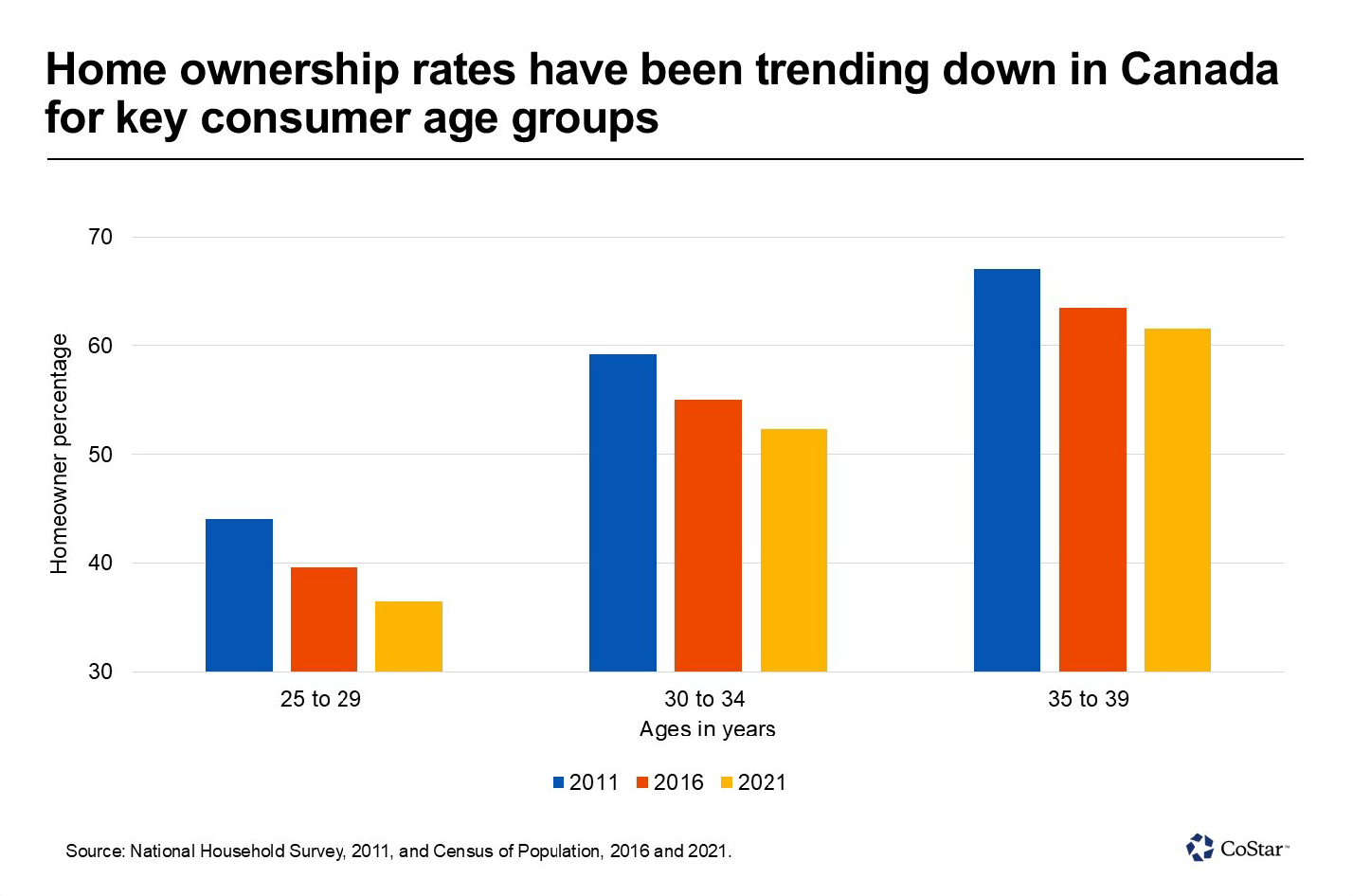
This month, a recent Statistics Canada report revealed that younger Canadians are less likely to own a home, more likely to live with their parents, and more likely to settle for smaller properties than either Generation X or baby boomers were at the same stage of life.In Toronto, the share of 25- to 29-year-olds living with parents climbed from 21.8% in 1991 to 48.6% in 2021 – nearly one in two young adults in that age group.After adjusting for those still living with parents, millennials recorded an adjusted homeownership rate of 49.9% – below Gen-Xers at 56.2% and baby boomers at 55.9% when each cohort was in the same age bracket.With fewer younger household formations, today’s youth are re-directing income from down payments or mortgage contributions, to more discretionary spending in experiences such as travel, entertainment, dining-out or hosting gatherings of friends.
Affordability remains a structural constraint. According to a recent IPSOS poll, a typical renter household still faces roughly a $589/month gap between what they can afford based on their current household income and the cost of owning a starter home that meets their family needs. Mortgage qualification rules, steep deposits and rate sensitivity continue to cap purchasing power—even as prices adjust.
Bottom line: Buyers continue to hold stronger negotiating power in Toronto where ample inventory is sustaining price corrections, however many buyers remain cautious: They are still watching job security, inflation, interest rates, trade uncertainty and geopolitical risk. They still see properties sitting. They still see price reductions. They anticipate having negotiating power well into next year.
The slow-market indicators support their view. Average listing days on market rose to 29 days, up from 25 last year. Average property days on market rose to 43 days, up from 37. The average sale-to-list price ratio was 98 per cent, which means the average property is still selling below asking. That is not what an urgent market looks like. That is what a negotiating market looks like.
2.2 Multifamily Rental Market
Rents are falling across the GTA - and the reason is actually pretty straightforward: we’ve hit a rare moment where supply surged just as demand pulled back. Canada’s population growth has effectively flatlined over the past year. More importantly, the segment of the population most likely to rent—non-permanent residents—is actually shrinking, declining by hundreds of thousands annually.This shift matters disproportionately for the rental market, as the majority of newcomers typically initially choose to rent upon arrival.In the first year after arriving in Canada, households’ rent-to-own ratio is greater than 5-to-1. So the market is absorbing a surge of new rental supply with a smaller pool of renters.
Rental Rate Trends
In the near term, the rental market will likely stay soft—especially if population growth remains flat over the next 12 months. But longer term, today’s slowdown in construction starts for housing is setting up the next supply squeeze, and this will push rents higher when Canada’s population reverses direction again and starts to accelerate (Typically, the GTA average duration before a home purchase is approximately 8.5 years; same time it takes to complete a new major hi-rise condominium or purpose-built rental development from idea inception).
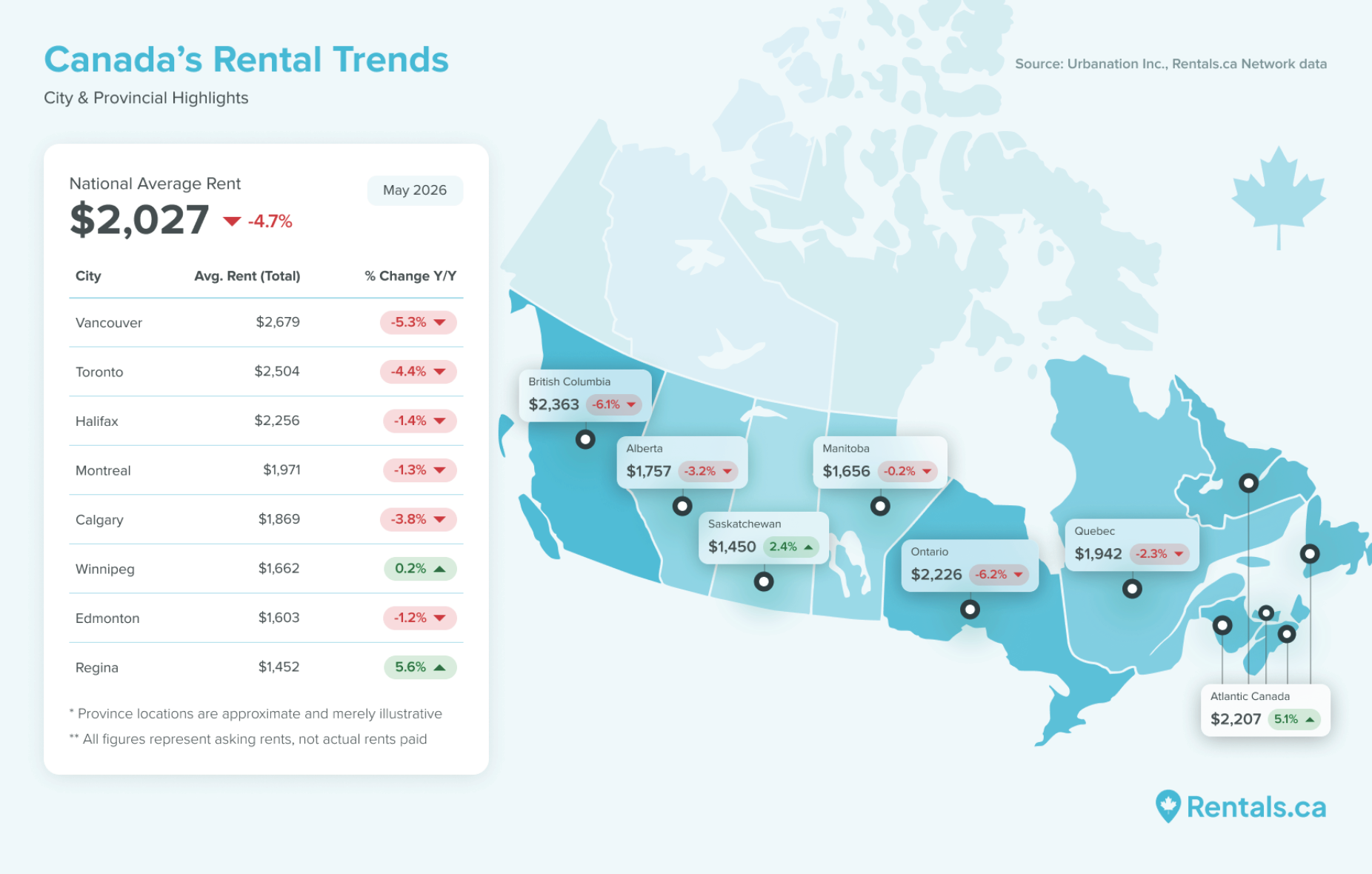
According to the latest National Rent Report from Rentals.ca and Urbanation, the average asking rent for all residential properties in Canada declined 4.7% year-over-year in April to $2,027, marking the 19th consecutive month of annual rent decreases.
•In Toronto, rents hover around
•$2,208 for a 1-bedroom
•$2,863 for a 2-bedroom
Bottom Line
The multifamily rental market is transitioning from a period of acute shortage to one of short-term oversupply and demand normalization.Lease-up times have lengthened amid higher vacancy rates, owners are expected to continue offering incentives to attract new renters.For tenants, this is a window of improved affordability. For investors, it’s a period that demands realism: deals must work on today’s rents, today’s financing costs, and realistic lease-up assumptions.
2.3 Office Market
The Canadian office market continued its gradual recovery through Q1 2026, building on the stronger leasing momentum that emerged throughout 2025. However, the market is not “back” in a broad sense. Instead, a shortage now exists within a surplus: premium, transit-connected, amenity-rich space is tightening, while older and less competitive buildings continue to struggle. “Available” space and “desirable” space are no longer the same thing.
Office utilization levels have largely stabilized, supported by firmer return-to-office policies across major employers. While this has helped improve occupancy, vacancy rates remain elevated relative to historical norms, and the market still requires sustained leasing momentum and positive absorption to fully rebalance.
New risks are also emerging. The U.S. trade conflict is beginning to weigh on business confidence, with Canadian companies slowing capital spending and reassessing hiring plans. Workforce reductions remain concentrated in tariff-sensitive industries such as manufacturing and warehousing, but large office occupiers — including major banks and government agencies — are also reviewing staffing levels and operational costs.
Market performance continues to diverge sharply by asset quality. Top-tier downtown buildings are outperforming with vacancy rates materially below market averages, while lower-quality assets increasingly rely on discounted rents, turnkey buildouts, and flexible lease structures to compete.
Toronto’s overall office availability rate improved to 17.6%, narrowing to roughly 200 basis points above direct vacancy, which currently sits near 15.4%. The decline in availability reflects stronger tenant demand, falling sublease inventory, and the end of the pandemic-era development cycle. Downtown Toronto continues to outperform the broader GTA, supported by financial and professional services firms and six consecutive quarters of positive absorption driven by return-to-office mandates.
Leasing activity also reflects a more cautious recovery. Many large lease renewals over the past year have been shorter-term — often under three years — as occupiers prioritize flexibility while workplace strategies continue evolving.
Looking ahead, the shrinking development pipeline is expected to support rental growth in premium assets. No major office projects have commenced since late last year, and Toronto is approaching the end of a long development cycle that began before the pandemic. Conversations across the market suggest net effective rents in the downtown core stopped declining in early 2025 and have started trending upward again, although gains remain uneven across building classes and locations.
2.4 Industrial Market
The GTA industrial market is beginning to stabilize after a challenging two- to three-year period marked by heavy speculative construction, rising interest rates, and softer tenant demand. While macroeconomic and geopolitical uncertainty continue to affect business activity, the expected renewal of the Canada–United States–Mexico Agreement (CUSMA) later this year is helping support longer-term confidence in cross-border trade and logistics.
The market is now moving through a rebalancing phase. Many tenants spent much of 2024 and 2025 delaying decisions while waiting for rents to soften further. That leverage is still available today, but the window may not remain open for long as leasing activity gradually improves and functional inventory becomes more limited.
Demand continues to be led by logistics and distribution users, followed by manufacturing, technology, pharmaceutical, e-commerce, and consumer goods firms. New demand is also emerging from recreational uses such as pickleball, padel, and climbing facilities, while churches and institutional groups are increasingly exploring industrial conversions where zoning allows.
Tenants remain focused on functionality. Modern clear heights, ESFR sprinkler systems, stronger power capacity, and deeper shipping courts are becoming critical requirements. Landlords continue offering selective incentives to maintain occupancy, although face rents are still increasing modestly in stronger submarkets. For most owners, occupancy and tenant retention remain the primary focus.
Leasing activity has helped reduce vacant space across several GTA submarkets. Demand remains strongest in major last-mile delivery markets such as North York, Mississauga, and Brampton, while larger-format development continues pushing west toward Milton, Oakville, Burlington, and Hamilton. These western markets are attracting occupiers seeking lower costs while maintaining access to labour, transportation infrastructure, and U.S. trade routes.
Overall availability across the GTA currently sits near 5.1%, up roughly 70 basis points year-over-year, while direct vacancy remains lower at approximately 4.1%. Asking rents have declined about 6% year-over-year to roughly $16.35 net per square foot and are now approximately 8% below peak levels reached three years ago.
At the same time, industrial investment activity remains active. Sales volume reached a four-year high this past quarter with more than 170 transactions completed. Much of this activity continues to be concentrated in smaller-bay and strata industrial product, a trend that accelerated in 2025. As a result, pricing for well-located small- and mid-bay industrial units has climbed above $325 per square foot in many parts of the GTA.
2.5 Retail Market
Canada’s economy continues to grow, but only modestly, and consumer spending remains the primary driver of that growth. Household spending now accounts for roughly 60% of GDP, making retailers increasingly dependent on consumers’ ability — and willingness — to spend. Ironically, persistently unaffordable housing has temporarily supported discretionary spending by keeping many households out of homeownership and away from mortgage obligations.
At the same time, slowing population growth is beginning to reduce the pace of new consumer formation. Fewer newcomers means fewer first-time purchases of furniture, appliances, vehicles, and other household goods. As a result, future retail growth will depend less on adding new customers and more on increasing spending per transaction, particularly as inflation keeps prices elevated.
Consumer spending patterns are also shifting. Grocery sales continue to perform well, particularly at big-box retailers, while entertainment and travel spending saw strong growth early in the year. In contrast, discretionary categories such as clothing, household goods, building materials, and garden supplies remain under pressure, reflecting broader weakness in the housing sector.
Retail fundamentals across the GTA remain relatively strong. Grocery-anchored plazas, service-oriented centres, and walkable high-street retail continue to command premium rents due to limited availability and steady foot traffic. Retail environments with strong tenant mixes and experiential appeal are outperforming more generic formats.
New development remains constrained by rising construction costs and limited land availability, creating a supply imbalance that continues to favour landlords. Retailers looking to expand or simply maintain existing locations are increasingly competing for a limited amount of quality space. Average asking rents across the GTA now sit near $36.00 net per square foot, up approximately 17% over the past five years and above the long-term average.
Overall retail availability in the GTA currently stands near 2.4%, while direct vacancy remains extremely tight at roughly 1.6% to 1.8%. Occupancy levels remain close to historic highs, supported largely by grocery, pharmacy, discount, and necessity-based retailers. However, some early signs of softening are beginning to emerge, with annual net absorption turning negative for the first time in nearly a decade.
Even so, investor demand for high-quality retail assets remains relatively strong. Limited development feasibility and durable cash flow continue attracting capital toward existing necessity-based retail properties. Premium retail assets are still trading aggressively, with cap rates generally falling within the 5.0% to 5.5% range.
3. Commercial Real Estate Investor Perspective
Investment activity across the GTA remained relatively stable through Q1 2026, with overall transaction volume declining just 3% year-over-year. The slowdown was driven primarily by a sharp pullback in retail investment activity, as historically tight supply in top retail corridors limited available product for sale.
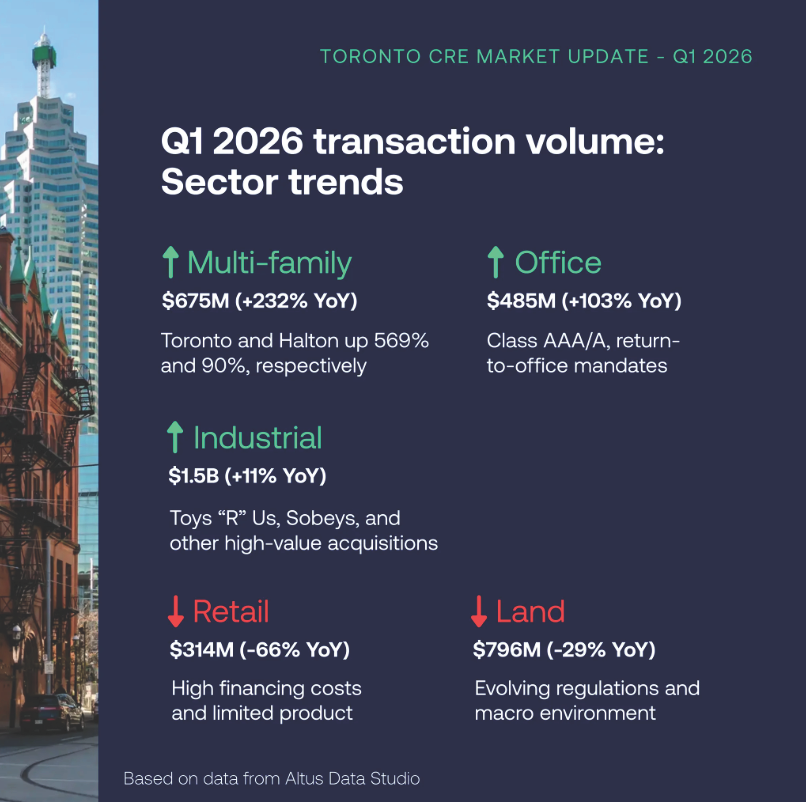
Retail investment volume fell 66% year-over-year to approximately $314 million. Investors remain cautious around consumer spending as population growth slows and household purchasing power weakens. Lower consumer confidence and rising living costs are pushing households toward essential spending, creating more uncertainty around discretionary retail performance in the near term.
Despite broader economic softness, investors continue targeting sectors with durable income and long-term structural demand. Multifamily remained one of the strongest-performing asset classes, with transaction volume reaching nearly $675 million — a 232% year-over-year increase. Investors continue viewing rental housing as a long-term inflation hedge supported by persistent affordability challenges and housing supply shortages across the GTA. Even with elevated construction activity, demand for stable rental product remains strong, helping multifamily maintain lower cap rates than most other asset classes.
Office investment activity also improved materially. The sector recorded approximately $485 million in transaction volume, up 103% year-over-year, with activity concentrated heavily in Class AAA and Class A assets. Improved leasing momentum, declining downtown vacancy trends, and stronger return-to-office policies have helped restore lender confidence in well-located office product after several difficult years for the sector.
Industrial remained one of the most active sectors overall, recording roughly $1.5 billion in transaction volume, up 11% year-over-year. The GTA’s strategic location, dense population base, and long-term logistics infrastructure requirements continue supporting investor confidence despite short-term economic uncertainty.
Land investment activity remained subdued. Total land transaction volume declined 29% year-over-year to approximately $796 million, including $387 million in residential land and $409 million in industrial-commercial land. Developers remain cautious as they navigate elevated construction costs, shifting regulations, financing challenges, and slower housing demand.
Overall, investors remain defensive but opportunistic. Capital is still active, but underwriting standards are significantly more disciplined than during the ultra-low-rate cycle. Durable income, strong locations, and operational resilience remain the key drivers of investment decisions in today’s market.
4. Going Forward – 2026
Overall conditions continued to improve until the recent outbreak of conflict in the Middle East, which introduced additional uncertainty.Persistent global uncertainty continues to highlight Canada’s safety and stability, driving conviction for Canadian real estate.
While investment capital for real estate has been active, it has also been selective towards high-quality assets and durable incomes in these uncertain times.Savvy investors with liquidity are capitalizing on quality assets that are available at a discount from the peak of a few years ago.
The best decision-makers don’t guess. If you’re leasing, relocating, buying, investing, or refinancing this year, I’ll help you pressure-test the numbers before you commit. Real estate is a long game — the right deal must work on paper and in real life.
Paramount represents tenants, buyers, and investors only (no conflicts of interest). The goal is simple: protect your downside, strengthen your position, and help you secure the right property at the right basis. Reach out when you’re ready.
Go on, entrepreneur — be great.
Mel


Copyright 2023. All rights reserved
Copyright 2023. All rights reserved
Follow