

Investor's Corner - May 2026
The Investor’s Corner
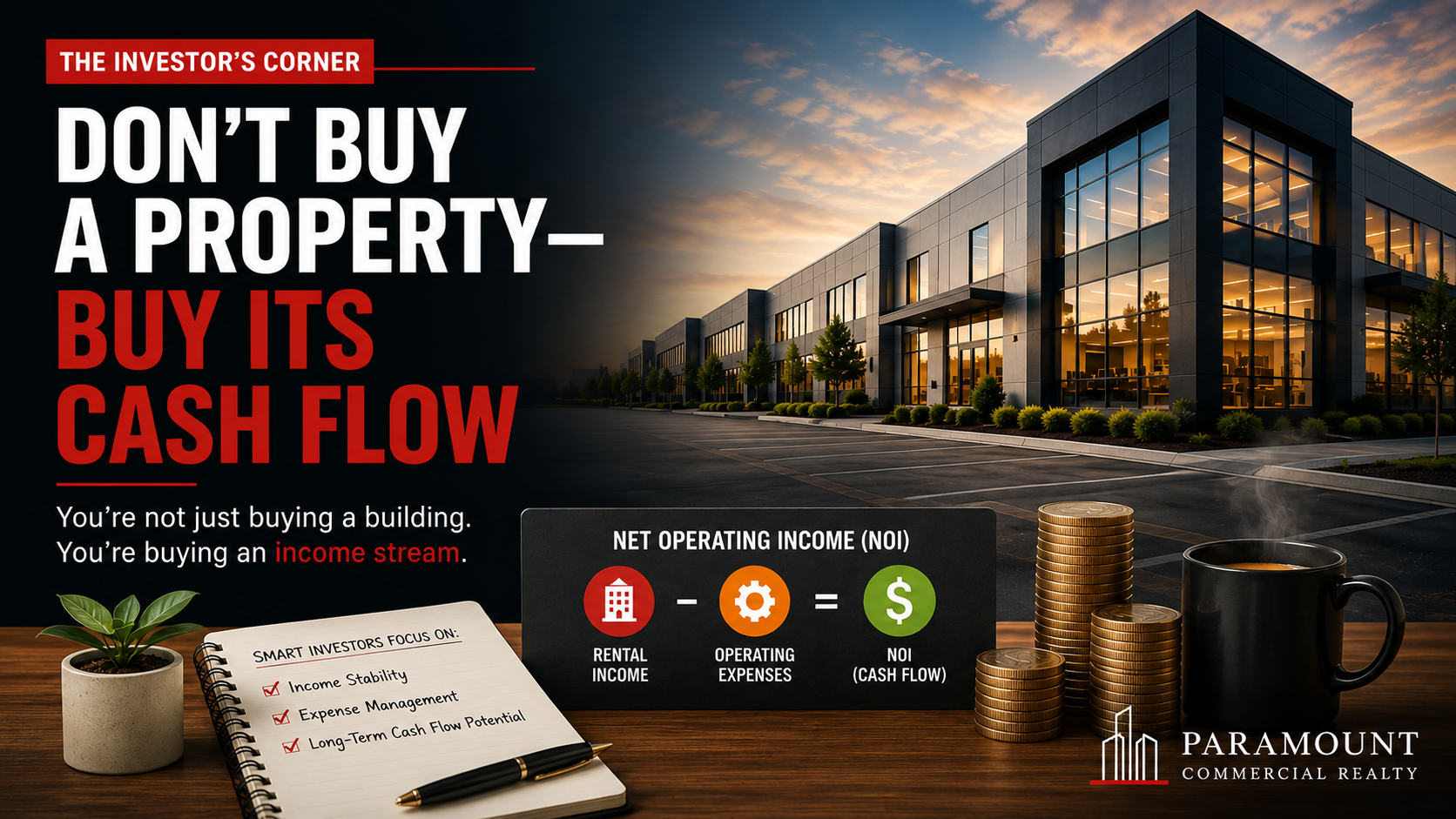
Don’t Buy a Property — Buy Its Cash Flow
One of the most common mistakes I see newer investors make is becoming overly focused on the purchase price of a property.
The conversation usually starts with questions like:
“Is this a good deal?”
“Can I negotiate the price lower?”
“What are similar properties selling for?”
Those are reasonable questions. But they are not the first questions experienced investors ask.
Seasoned investors tend to approach acquisitions differently. Before they focus on price, they focus on income. More specifically, they focus on the quality, durability, and future potential of the property’s cash flow.
Because at the end of the day, you are not simply buying a building.
You are buying an income stream.
That distinction changes how sophisticated investors evaluate opportunities.
A property can look impressive on the surface—strong location, attractive finishes, modern branding—but if the income is weak, unstable, or poorly managed, the investment fundamentals begin to break down quickly. On the other hand, a less glamorous property with strong and reliable cash flow can often become the far more valuable long-term asset.
This is where Net Operating Income, or NOI, becomes critically important.
NOI is essentially the income a property generates after operating expenses are paid, but before financing costs are considered. In practical terms, it reflects how effectively the property itself performs as an income-producing asset.
Rental income comes in.
Operating expenses go out.
What remains is the property’s operating income.
That sounds straightforward, but the implications are significant.
Two properties may carry identical asking prices while producing dramatically different levels of income. One may generate strong, stable returns with efficient expenses and dependable tenancy. The other may suffer from poor management, underperforming rents, vacancy exposure, or rising operational costs.
Yet many first-time investors spend more time negotiating the purchase price than analyzing the strength of the income itself.
That is often where costly mistakes begin.
Strong investing is rarely about buying the cheapest property. It is about acquiring income that is sustainable, improvable, and resilient over time.
This is also why sophisticated investors spend considerable time evaluating tenant quality, lease structures, operating efficiencies, and future revenue opportunities. They understand that value is ultimately driven by the income the asset can reliably produce—not simply by the number attached to the listing.
I often encourage investors to shift their mindset away from:
“How much does this property cost?”
and toward:
“What kind of income-producing business am I actually acquiring?”
That reframes the entire investment decision.
Once you begin viewing commercial real estate through the lens of cash flow instead of just ownership, your analysis becomes more strategic. You start paying closer attention to stability, operational performance, lease rollover risk, expense control, and opportunities to improve income after acquisition.
That is where long-term wealth creation typically happens.
Real estate investing is not simply about accumulating doors, square footage, or asset count. It is about building reliable and growing streams of income that support your financial objectives over time.
The investors who consistently build stronger portfolios are usually the ones who understand that cash flow—not emotion—is what ultimately determines the strength of an acquisition.
Paramount represents tenants, buyers, and investors only (no conflicts of interest). The goal is simple: protect your downside, strengthen your position, and help you secure the right property at the right basis. Reach out when you’re ready.
Go on, entrepreneur — be great.
Mel
In next month’s Investor’s Corner, we’ll look at understanding Cap Rates.


Copyright 2023. All rights reserved
Copyright 2023. All rights reserved
Follow