


Market Snapshot - March 2026
Canada & Greater Toronto Area
Commercial Real Estate Market Report
Q1 2026 | March Edition
Prepared by: Paramount Real Estate Properties Inc.
Market Focus: Greater Toronto Area (GTA)
Asset Coverage: Residential Ownership, Multifamily Rental, Office, Industrial, Retail
Executive Summary
Capital markets are transitioning from defensive positioning to selective re-engagement.
Office markets are stabilizing, led by strong performance in premium downtown assets.
Industrial markets are rebalancing, with rising availability and more disciplined leasing activity.
Retail remains resilient, supported by limited supply and necessity-based demand.
Multifamily is shifting from peak growth to short-term softness, but remains structurally strong.
Residential Housing is under pressure as confidence weakens and affordability remains constrained.
Investment activity is stabilizing, with capital returning selectively to core assets.
This report provides a sector-by-sector assessment of current conditions and outlines strategic considerations for investors, landlords, and occupiers.
1. Macroeconomic Overview
1.1 Labour Market Conditions
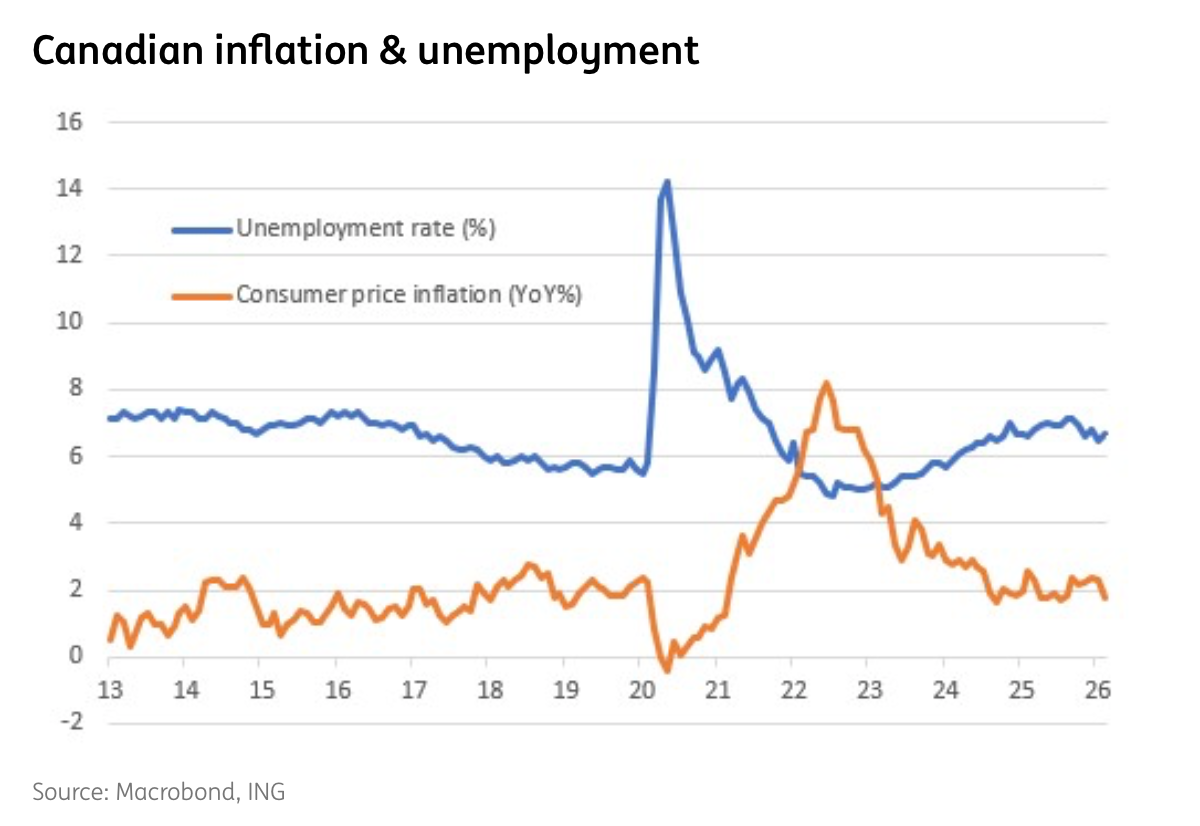
Canada’s labour market is weakening. Unemployment has risen to 6.7 percent, and private sector hiring has stalled. Over the past year, job growth has been driven almost entirely by government hiring, masking a broader slowdown in the real economy.
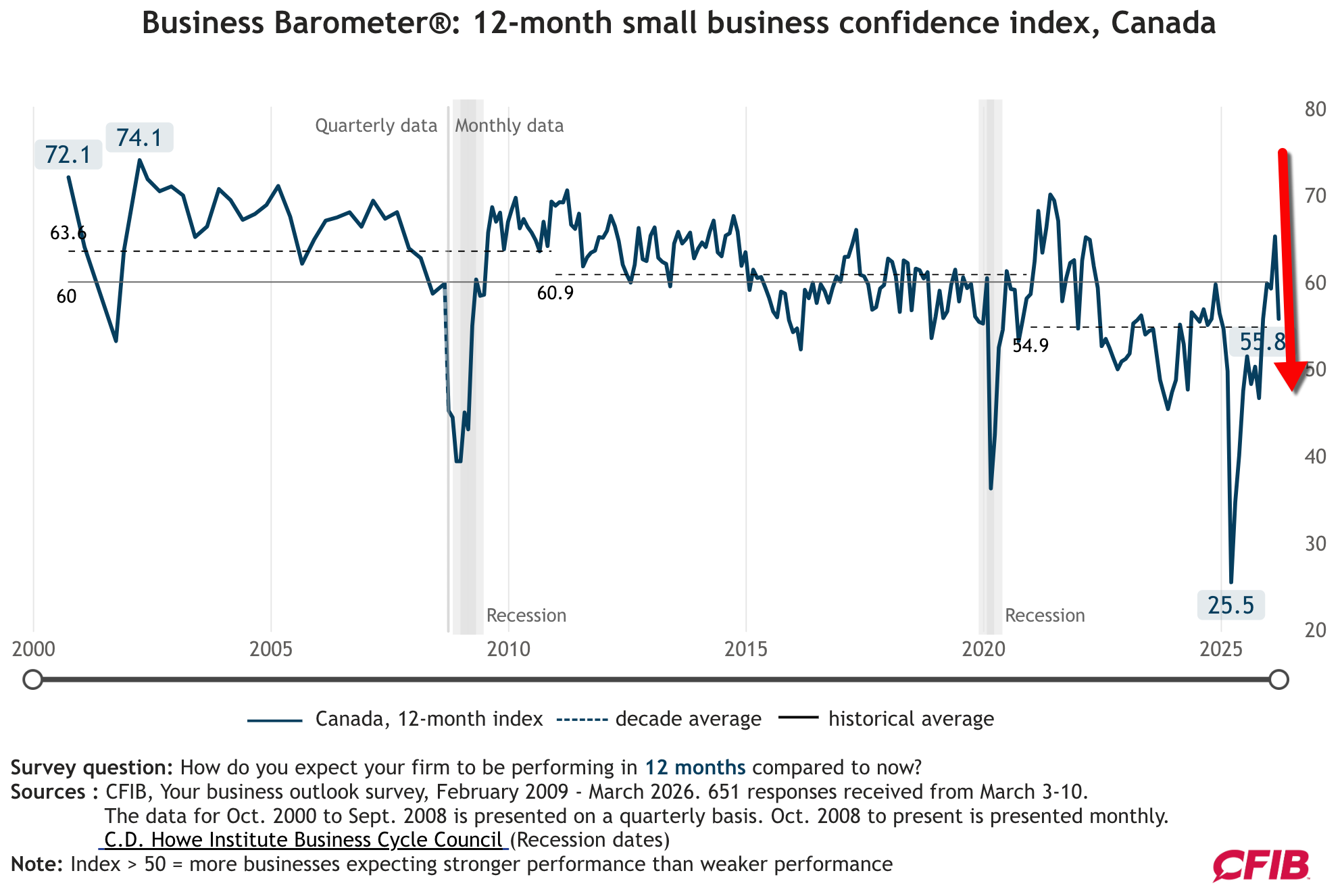
Business sentiment reflects this shift. According to the Bank of Canada’s Business Outlook Survey, most firms are not planning to expand headcount, and expectations for layoffs have increased. Job search times are rising and are approaching levels not seen in decades.
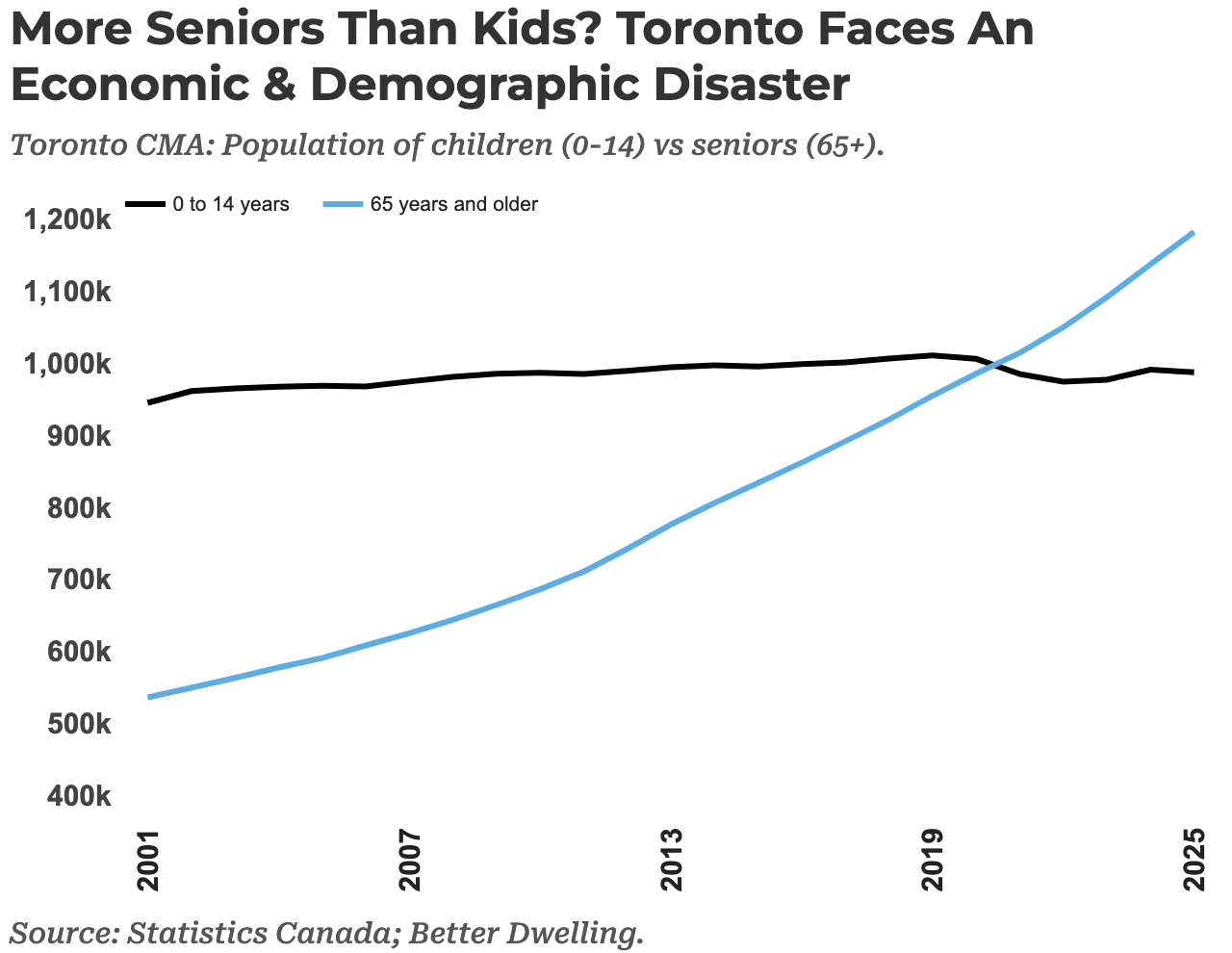
At the same time, demographic trends are adding pressure. Population growth is slowing, and the balance between younger workers and retirees is deteriorating. An aging population is reducing labour force growth and creating long-term constraints on productivity.
For real estate, the implications are clear. Businesses are slowing expansion plans. Hiring is cautious. Space demand is becoming more defensive. The market is not in crisis, but it is moving into a more restrained phase.
1.2 Inflation and Monetary Policy
Inflation has cooled to 1.8%, but the story isn’t over. Core measures remain stable, yet food and cost-of-living pressures persist—highlighting a growing gap between “measured” inflation and lived experience. Compared with February 2026, the most notable shift in March is the reversal in bond yields:
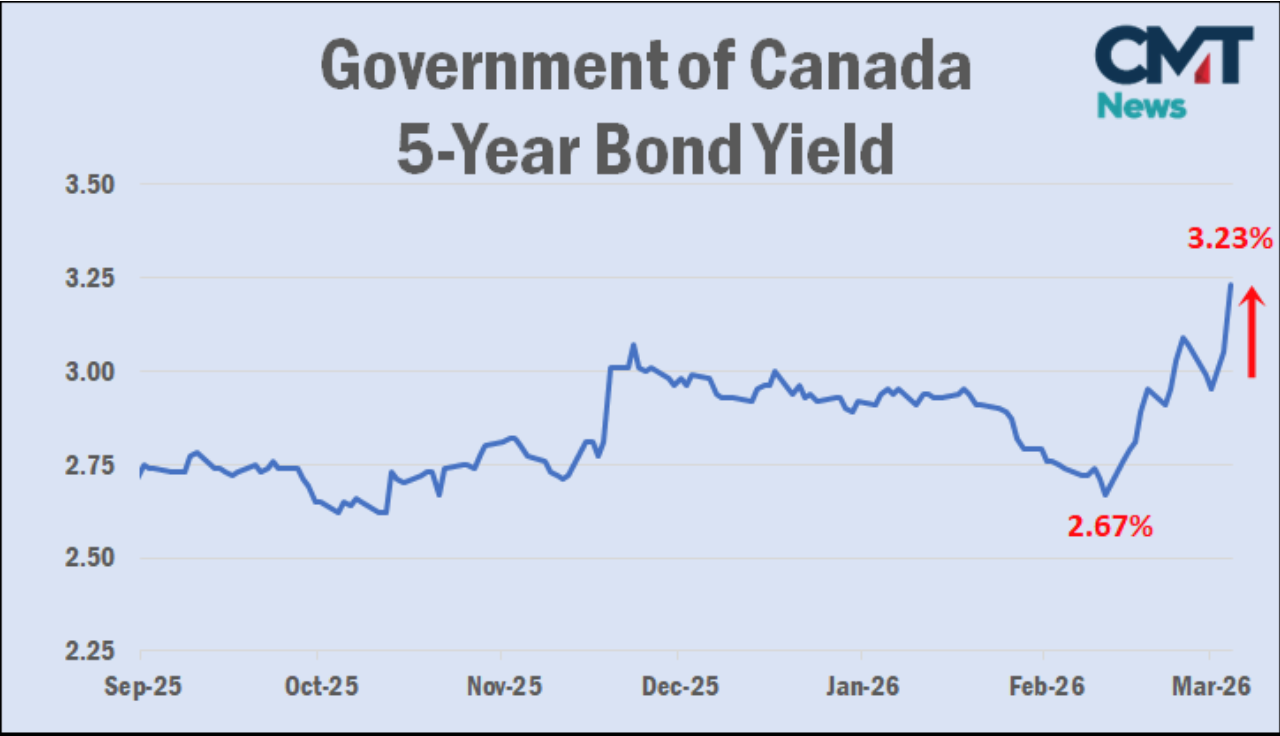
5-Year GoC Bond: ↑ to ~3.20%
10-Year GoC Bond: ↑ to ~3.59%
Mortgage bonds also moved upward, increasing the cost of long-term capital
This is a meaningful development. After several months of declining or stable yields, March suggests that fixed income markets are re-pricing inflation and fiscal risk, rather than continuing to lean toward rate cuts.
A new risk is emerging: energy. Oil prices have surged above $100 amid geopolitical conflict, increasing the likelihood of a renewed inflation uptick in the months ahead. Unlike prior demand-driven inflation, this represents a supply shock—harder to control and more volatile in its impact. War, higher energy cost = inflation = higher bond yields = higher fixed rates. Markets are rapidly repricing inflation and rate expectations, driving bond yields higher and triggering a new round of fixed mortgage increases. The benchmark five-year Government of Canada bond yield—used to price most fixed mortgages—has surged more than 60 basis points since last month. Canadian fixed mortgage rates have moved decisively higher, with lenders rolling out increases of up to 30 basis points as bond yields continue their rapid climb. Credit markets reflect this tension:
Corporate BBB Bond spreads widened to ~122 bps (↑)
Commercial mortgage spreads expanded to ~1.5%–4.5%
Translation:
Capital is still available — but pricing risk is increasing.
The Bank of Canada is now in a difficult position. Economic growth is slowing, yet inflation risks are re-emerging. As a result, policy rates remain on hold at 2.25 percent, but expectations are shifting toward potential rate increases later in 2026.
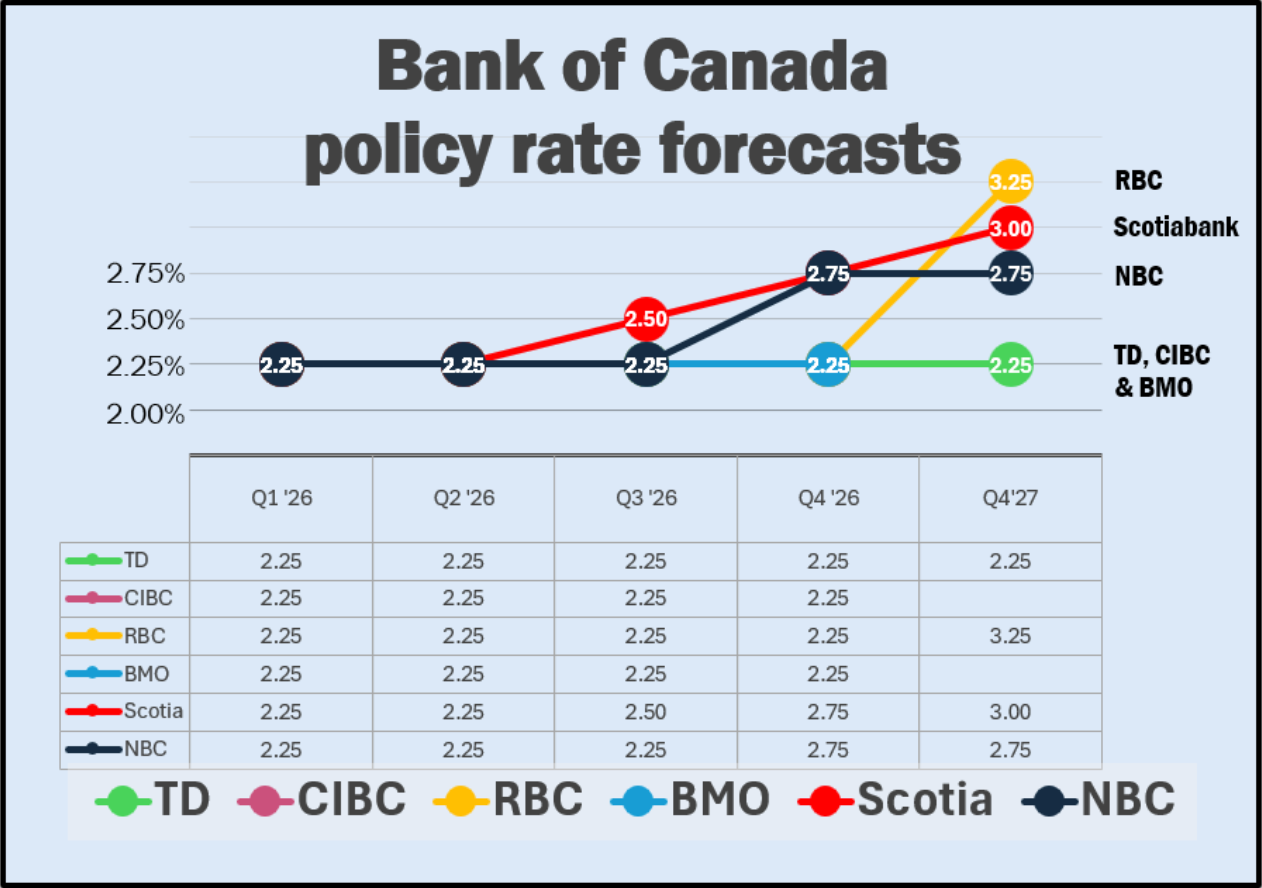
For real estate, this creates a challenging backdrop. Financing costs are less predictable. Buyers are hesitant. Businesses are delaying decisions. Stability, not just direction, is now the key concern.
2. GTA Asset Class Analysis
2.1 Residential Housing Market
The housing market continues to be driven by confidence rather than affordability alone. Right now, confidence is weakening. Concerns around employment, interest rates, and broader economic conditions are causing buyers to hesitate.
Sales activity remains subdued, while listings are gradually increasing. Prices are adjusting downward, with average GTA home values declining year-over-year and condo prices retracing toward pre-pandemic levels.
Affordability remains a structural issue. Many households still cannot bridge the gap between rental costs and ownership expenses. Mortgage qualification rules and higher borrowing costs continue to limit purchasing power.
At the same time, demand has not disappeared. It is waiting. A large pool of potential buyers remains on the sidelines, looking for clearer signals on rates, pricing stability, and economic direction.
The result is a market in a holding pattern. Prices are softening gradually, not collapsing. Activity is slow, but not absent. A recovery will depend on improved confidence, not just lower rates. As we enter the spring market, we await the effects of the Ontario Government’s announcement to strengthen the existing provincial HST New Housing Rebate and New Residential Rental Property Rebate for one year, from April 1, 2026, to March 31, 2027, temporarily removing the HST for eligible buyers of qualifying new homes.
2.2 Multifamily Rental Market
The multifamily sector is shifting from rapid growth to a more balanced and complex phase. Short-term conditions are softening, but long-term fundamentals remain intact.
Vacancy has increased as new supply enters the market and population growth slows. Immigration levels have moderated, and the outflow of temporary residents is reducing rental demand. This is most visible in downtown Toronto and areas near post-secondary institutions.
Rents are adjusting downward after several years of strong growth. National rents have declined for over a year, and Toronto has seen notable year-over-year decreases. Lease-up periods are longer, and incentives have returned in some buildings.
At the same time, the development pipeline is beginning to weaken. Condo projects are slowing due to poor pre-sales, and construction feasibility is becoming more challenging. This is creating a short-term supply increase but a potential medium-term supply shortage.
From an investment perspective, the market is resetting. Cap rates remain elevated, transaction activity is limited, and financing is more restrictive. Investors are focusing on stable assets and realistic underwriting.
Multifamily is no longer driven by rapid rent growth. It is defined by execution, discipline, and long-term fundamentals.
2.3 Office Market
Toronto’s office market is stabilizing, but it is not returning to its previous form. Vacancy remains elevated compared to pre-pandemic levels, although the downtown core has improved from its peak vacancy rates.
Demand is being driven by quality. Tenants are prioritizing newer buildings with strong amenities and transit access. The focus has shifted from how much space is needed to how well it supports employees.
This has created a clear divide in the market. Premium buildings are leasing steadily and showing signs of recovery. Older and less competitive assets continue to struggle with high vacancy and downward pressure on rents.
Office employment has grown since 2020, which is supporting demand, but hybrid work has permanently reduced space requirements per employee.
The market is no longer in decline. It is evolving into a more selective, experience-driven environment where quality determines performance.
2.4 Industrial Market
The industrial sector is moving into a more balanced phase after several years of exceptional growth. Vacancy has increased modestly, and rents have softened from peak levels.
Demand remains present, particularly in logistics and distribution. However, larger tenants have slowed expansion, and smaller businesses are becoming more cautious due to economic uncertainty and tariff pressures.
A notable shift is occurring among users. More small and mid-sized businesses are choosing to purchase industrial units rather than lease. This has supported activity in the small-bay industrial market, particularly in units ranging from 7,500 to 15,000 square feet.
New supply has increased availability, giving tenants more choice and leverage. At the same time, well-located properties with yard space continue to see strong demand.
Industrial remains a fundamentally strong asset class, but it is transitioning from rapid growth to a more sustainable and competitive environment.
2.5 Retail Market
Retail continues to perform steadily despite broader economic uncertainty. Limited new development has created a supply-constrained environment, which is supporting occupancy and rent growth in strong locations.
Consumer behaviour is evolving. Shoppers are more value-focused, and spending patterns are shifting toward essentials. Grocery-anchored centres and service-based retail continue to perform well.
At the same time, experiential retail is expanding. Fitness, wellness, and entertainment uses are becoming more prominent as landlords adapt to changing consumer expectations. Physical stores remain important, particularly when integrated with digital channels.
Population shifts are also shaping demand. Migration to more affordable regions is redistributing spending patterns, while cost pressures are reducing discretionary spending in some categories.
Retail is not a high-growth sector, but it remains one of the most stable. Well-located assets with strong tenant mixes continue to perform consistently.
3. Commercial Real Estate Investor Perspective
The investment market is stabilizing after a period of uncertainty. Transaction volumes declined in 2025 but showed improvement toward year-end. Pricing expectations between buyers and sellers are beginning to align.
Investors are shifting from capital preservation to selective deployment. Multifamily and retail are attracting strong interest due to their income stability. Industrial remains active, particularly in smaller-bay assets. Office investment is focused on high-quality properties with long-term potential.
Financing remains a key constraint. Higher borrowing costs and stricter underwriting standards are limiting activity, particularly for leveraged investors. As a result, capital is being deployed more carefully.
Investors are prioritizing durability over growth. Deals must work under current conditions, not future assumptions. This is creating a more disciplined and sustainable investment environment.
4. Strategic Outlook – 2026
The market is entering a period of recalibration. Each asset class is adjusting in its own way. Multifamily is stabilizing after rapid growth. Office is recovering selectively. Industrial is normalizing. Retail remains steady. Land sales have declined below the 5-Year average while distressed land sales are on the climb.
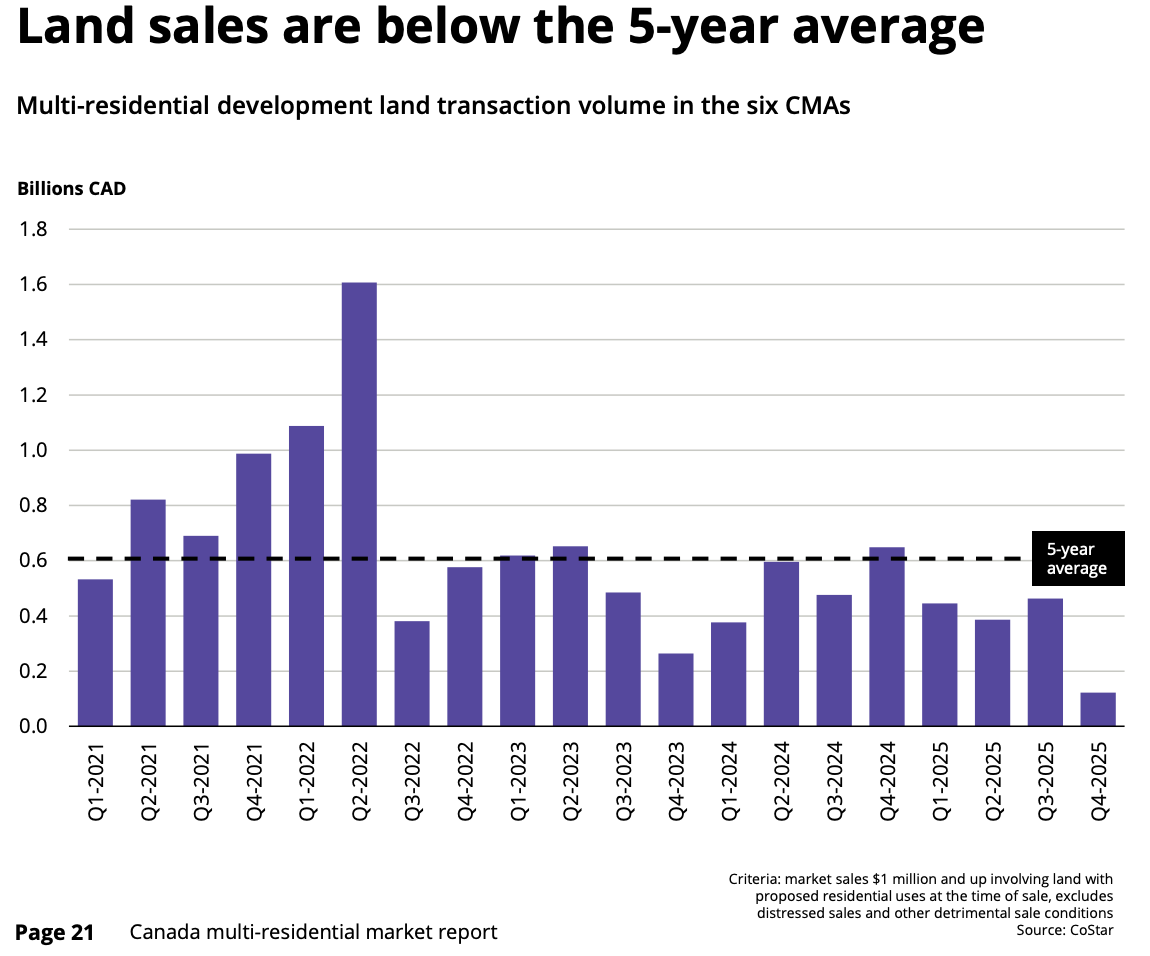
The next phase of the cycle is forming, but it will not be driven by momentum. It will be driven by discipline. Investors and operators who adapt to current conditions will be best positioned to succeed.
This is no longer a “wait for rates” market. It is a selection and strategy market. Disciplined buyers who:
underwrite conservatively,
prioritize income durability, and
negotiate basis aggressively
will find opportunity. Those relying on broad market appreciation will not.
The foundation for the next expansion phase is forming. Performance in this environment will reward disciplined underwriting, prudent capital structures, and operational precision.
Weakened values may signal “it’s a good time to buy”: Small-bay industrial properties with opportunities for rent growth on turnover; existing multifamily; and new multifamily development that can tap into attractive federal financing.
Employment trends in Ontario will remain a key indicator of tenant demand. Interest rate direction in the second half of 2026 will influence refinancing and acquisition velocity.Within this “higher-for-longer” interest rate environment, development feasibility will shape future supply growth, particularly in multifamily.
The best decision-makers don’t guess. If you’re leasing, relocating, buying, investing, or refinancing this year, I’ll help you pressure-test the numbers before you commit. Real estate is a long game — the right deal must work on paper and in real life.
Paramount represents tenants, buyers, and investors only (no conflicts of interest). The goal is simple: protect your downside, strengthen your position, and help you secure the right property at the right basis. Reach out when you’re ready.
Go on, entrepreneur — be great.
Mel


Copyright 2023. All rights reserved
Copyright 2023. All rights reserved
Follow