


Market Snapshot - June 2026
Canada & Greater Toronto Area
Commercial Real Estate Market Report
Q2 2026 | June 2026 Edition
Prepared by: Mel Giannone, Paramount Real Estate Properties Inc.
Market Focus: Greater Toronto Area (GTA)
Asset Coverage: Residential, Multifamily Rental, Office, Industrial, Retail, Land
EXECUTIVE SUMMARY
June was not a quiet month for the Canadian real estate market. The economy showed some signs of resilience, but inflation risk returned, borrowing costs became more volatile, and market confidence remained fragile. The GTA is still moving through a negotiation-driven cycle, where tenants, buyers, investors, and lenders are all trying to separate temporary volatility from long-term value.
A growing source of uncertainty entering the second half of 2026 is geopolitical risk. Trade disputes, tariffs, international conflicts, domestic politics, and shifting monetary policy have become increasingly important considerations for investors, developers, and occupiers alike. Particular attention is being focused on July 1st, when Canada, the United States, and Mexico must formally notify one another whether they intend to renew the Canada-United States-Mexico Agreement (CUSMA) for another 16-year term or move into an annual review process. Recent comments from U.S. President Donald Trump indicating he is "not looking to renew" the agreement have raised concerns regarding future trade stability across North America. For commercial real estate, prolonged uncertainty surrounding CUSMA could translate into higher construction material costs, longer procurement lead times, larger contingency requirements, and greater difficulty underwriting development projects. At the same time, the Canadian dollar weakened to a 14-month low against the U.S. dollar in mid-June, touching approximately C$1.418 per U.S. dollar according to Reuters. Should the U.S. Federal Reserve maintain a more hawkish stance than the Bank of Canada, additional currency weakness could place further upward pressure on imported costs, inflation, and borrowing rates. While none of these risks are certain to materialize, they represent an increasingly important backdrop for real estate decision-making as investors and occupiers enter the second half of the year.
Residential housing tightened modestly in May, but prices remain below last year and buyers continue to hold meaningful negotiating power.
Multifamily rental markets are still softening as asking rents decline and newer, higher-priced supply takes longer to absorb.
Office markets continue to recover selectively, with premium downtown space outperforming older and less competitive buildings.
Industrial markets remain in a rebalancing phase, with functional space still in demand but rents below peak levels.
Retail remains resilient, supported by necessity-based tenants, but higher household costs are starting to pressure discretionary categories.
Investment capital remains active, but more selective, with durable income, strong locations, and realistic underwriting driving decisions.
This report provides a sector-by-sector assessment of current conditions and outlines strategic considerations for investors, landlords, and occupiers.
1. Macroeconomic Overview
1.1 Labour Market Conditions
Canada’s labour market improved in May, but the improvement should be read carefully. Employment increased by 88,000 jobs, and the national unemployment rate fell from 6.9% in April to 6.6% in May. Private-sector employment rose by 56,000, while public-sector employment increased by 20,000. That is a better print than the market expected, but it does not erase the weakness that built up earlier in the year. Statistics Canada also noted that unemployment remains above the pre-pandemic average of 6.0% observed from 2017 to 2019. (Statistics Canada)
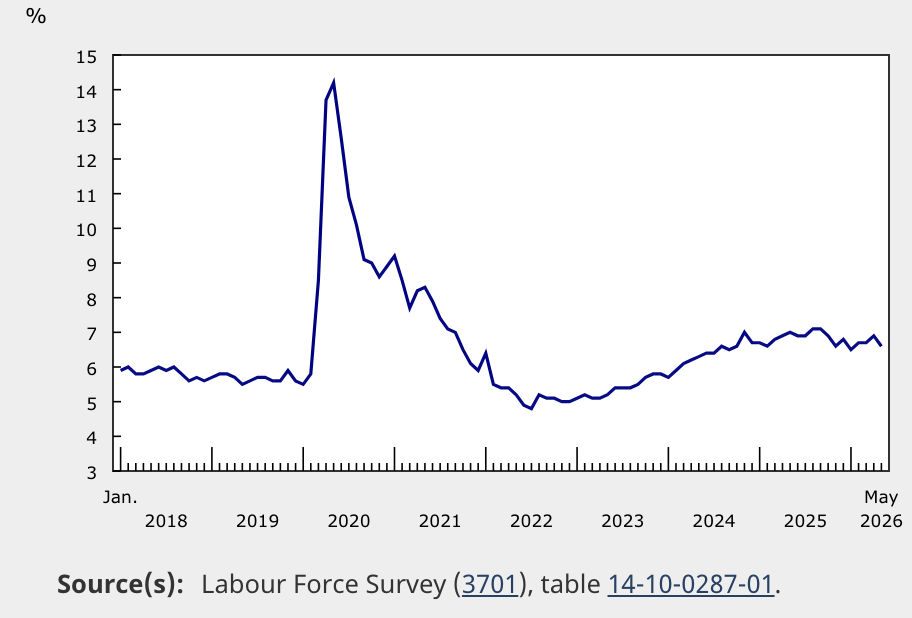
The youth labour market remains a concern. Youth unemployment declined to 13.4% in May, but it remains well above the pre-pandemic average of 10.8%. This matters for real estate because younger workers are also future renters, first-time buyers, retail consumers, and small business operators. When this group struggles to find stable employment, household formation slows, discretionary spending weakens, and housing demand becomes more fragile. (Statistics Canada)
Financial stress among Canadian households remains elevated despite the improvement in headline employment numbers. Recent consumer research from Omnisend found that approximately 31% of Canadians now maintain a secondary source of income or side hustle to help cover everyday living expenses. While entrepreneurial activity is generally positive, the growing reliance on supplemental income suggests many households continue to struggle with the cumulative effects of inflation, housing costs, and higher borrowing expenses.
This trend highlights an important distinction within the labour market. Employment may be improving, but many workers are still finding that a single income source is not providing the same purchasing power it did only a few years ago. For real estate markets, this reinforces the idea that household formation, homeownership decisions, and discretionary spending remain sensitive to changes in employment stability and cost of living.
For tenant-occupiers, the labour picture supports continued caution. Hiring may have improved in May, but many businesses are still managing around weak productivity, high input costs, trade uncertainty, and unpredictable consumer demand. Expansion decisions are likely to remain selective. In this kind of environment, tenants are not simply asking whether they need space. They are asking whether the space improves efficiency, lowers risk, and gives them flexibility.
For owner-investors, the key takeaway is that labour conditions are no longer deteriorating at the same pace, but they are not strong enough to drive broad-based demand growth across every property type. Real estate demand is still present, but it is uneven. Assets tied to necessity, productivity, logistics, housing need, and demographic durability should continue to outperform assets that depend on discretionary growth or speculative expansion.
Bottom line: May’s labour report offered relief, not a full recovery. The market has moved from “weakening quickly” to “stabilizing cautiously.” That distinction matters. It supports confidence, but not complacency.
1.2 Population Trends
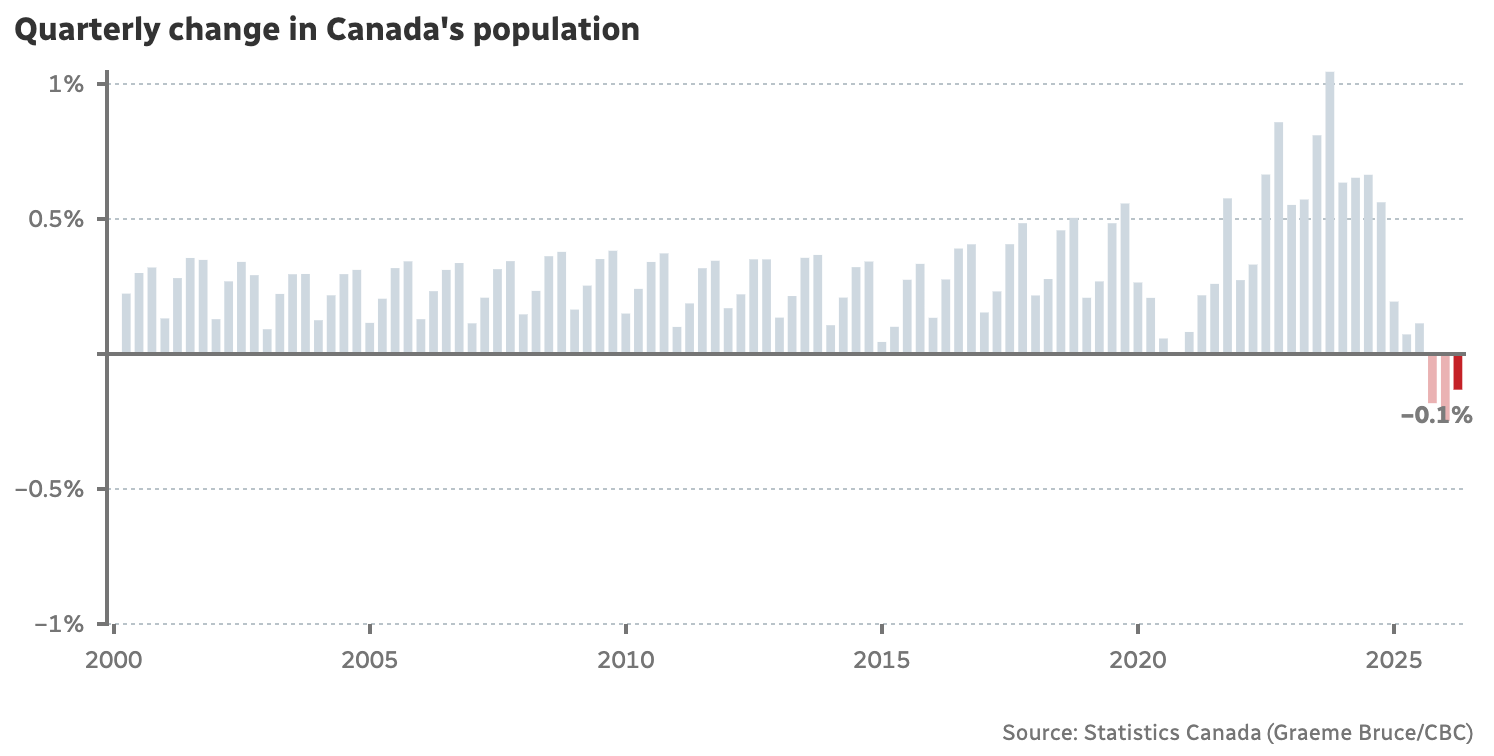
Canada's population growth continues to slow materially after the record expansion experienced between 2022 and 2024. Recent federal immigration policy changes have shifted the focus from rapid population growth toward housing affordability, infrastructure capacity, and labour market balance. Permanent resident targets have been reduced, temporary foreign worker programs have been tightened, and international student permit allocations have been scaled back.
The result is a significant slowdown in population growth. Recent Statistics Canada estimates show Canada's population actually declined by approximately 230,000 people in the first quarter of 2026, marking one of the largest quarterly declines on record. Much of this decline was driven by a reduction in temporary residents, as work permits expired, international student populations contracted, and fewer new entrants replaced those leaving the country.
At the same time, Canada is experiencing a notable increase in emigration. According to Statistics Canada data highlighted by Better Dwelling, Canadians are leaving the country at the fastest pace observed in more than seven decades. Rising housing costs, affordability challenges, tax burdens, limited economic opportunities, and concerns regarding future living standards are increasingly motivating both young professionals and skilled workers to seek opportunities elsewhere. While immigration remains positive overall, rising outflows are reducing the net benefit that migration has historically provided to economic growth.
Natural population growth is also weakening. Canada continues to experience historically low fertility rates while an aging population is increasing annual mortality levels. Births still exceed deaths nationally, but the gap continues to narrow. This means future population growth will depend increasingly on immigration rather than domestic demographic expansion.
Ontario remains Canada's largest population centre, but migration patterns continue to evolve. High housing costs, affordability pressures, congestion, and changing workplace preferences continue to encourage households to relocate away from the Greater Toronto Area toward more affordable regions of Ontario and other provinces. Alberta remains one of the largest beneficiaries of interprovincial migration, while secondary Ontario markets continue attracting residents seeking lower housing costs and improved quality of life.
For real estate, these demographic shifts are beginning to influence demand patterns. Slower immigration growth reduces pressure on ownership and rental housing markets, particularly in major urban centres such as Toronto that benefited most from record newcomer inflows. Fewer newcomers also means fewer first-time purchases of homes, vehicles, furniture, appliances, and consumer goods, creating downstream impacts across residential, retail, office, and industrial sectors.
At the same time, Canada's long-term demographic outlook remains supportive of real estate. Housing shortages persist, the population continues to age, and demand for healthcare, senior housing, and age-related services is expected to accelerate over the coming decade. Population growth may be slowing, but it is not structurally disappearing.
Bottom line: Demographics are no longer providing the same level of economic acceleration seen during the post-pandemic recovery. Slower immigration, declining temporary resident populations, rising emigration, lower birth rates, and an aging population are all reducing short-term demand growth across multiple sectors. For real estate investors and occupiers, demographic trends remain supportive over the long term, but they are unlikely to provide the same level of immediate demand support that markets enjoyed between 2022 and 2024.What this data suggests is that we could experience, over the near term, continued:
Falling apartment rents
Rising rental vacancy
Weak condo absorption
Softer retail spending
Slower labour force growth
Reduced office demand growth
Increased competition for tenants
1.3 Inflation and Monetary Policy
The Bank of Canada held its overnight rate at 2.25% on June 10, with the Bank Rate at 2.50% and the deposit rate at 2.20%. This confirms that the Bank remains in a holding pattern, balancing a softer domestic economy against renewed inflation risk. (Bank of Canada)
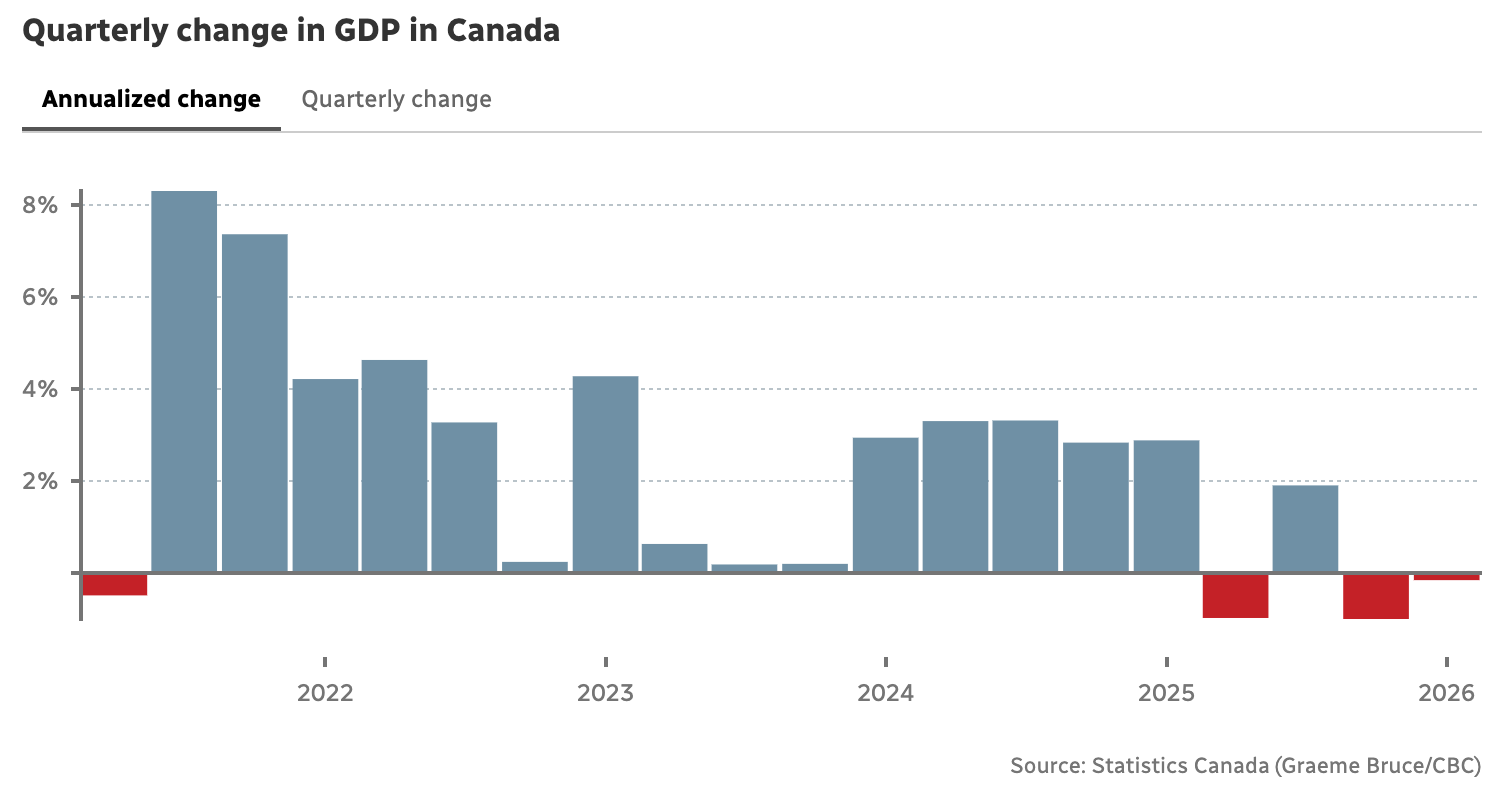
Inflation risk became more complicated in June. May CPI reportedly accelerated to 3.2% year-over-year, up from 2.8% in April, largely due to higher gasoline prices and renewed food-cost pressure. That does not necessarily mean Canada is returning to the inflation crisis of 2022, but it does mean the path to lower rates is no longer clean. Headline inflation is being pushed by energy and supply-side forces, while core inflation appears more contained. (Wall Street Journal)
This is the uncomfortable part for real estate. Canada’s economy would likely benefit from lower rates, but the Bank of Canada cannot ignore energy-driven inflation, food costs, or the exchange-rate impact of moving too far away from U.S. monetary policy. If the Bank cuts too aggressively while the U.S. Federal Reserve holds, the Canadian dollar could weaken, making imports more expensive and adding more pressure to inflation.
For borrowers, the main issue is not only where rates are today. It is the volatility around the path forward. Variable-rate borrowers are seeing stability for now because the overnight rate remains unchanged. Fixed-rate borrowers face a more complicated picture because Government of Canada bond yields respond quickly to inflation expectations, oil prices, and global capital flows.
For real estate, this means underwriting must remain conservative. Deals should not rely on a sharp rate-cut cycle to work. Tenant demand, rent growth, vacancy assumptions, refinancing risk, and exit cap rates all need to be tested under a higher-for-longer environment.
Bottom line: The rate environment is stable on the surface, but unstable underneath. Policy is on hold, inflation has reappeared as a risk, and fixed borrowing costs remain vulnerable to global shocks. In this market, certainty has value.
2. GTA Asset Class Analysis
2.1 Residential Housing Market
The GTA housing market tightened in May, but it remains far from overheated. TRREB reported that May home sales increased on a seasonally adjusted basis by 10% month-over-month compared with April, while new listings fell by 2.1%. On a year-over-year basis, the MLS HPI Composite benchmark was down 6.7%, and the average selling price was $1,069,700, down 4.6% from May 2025.
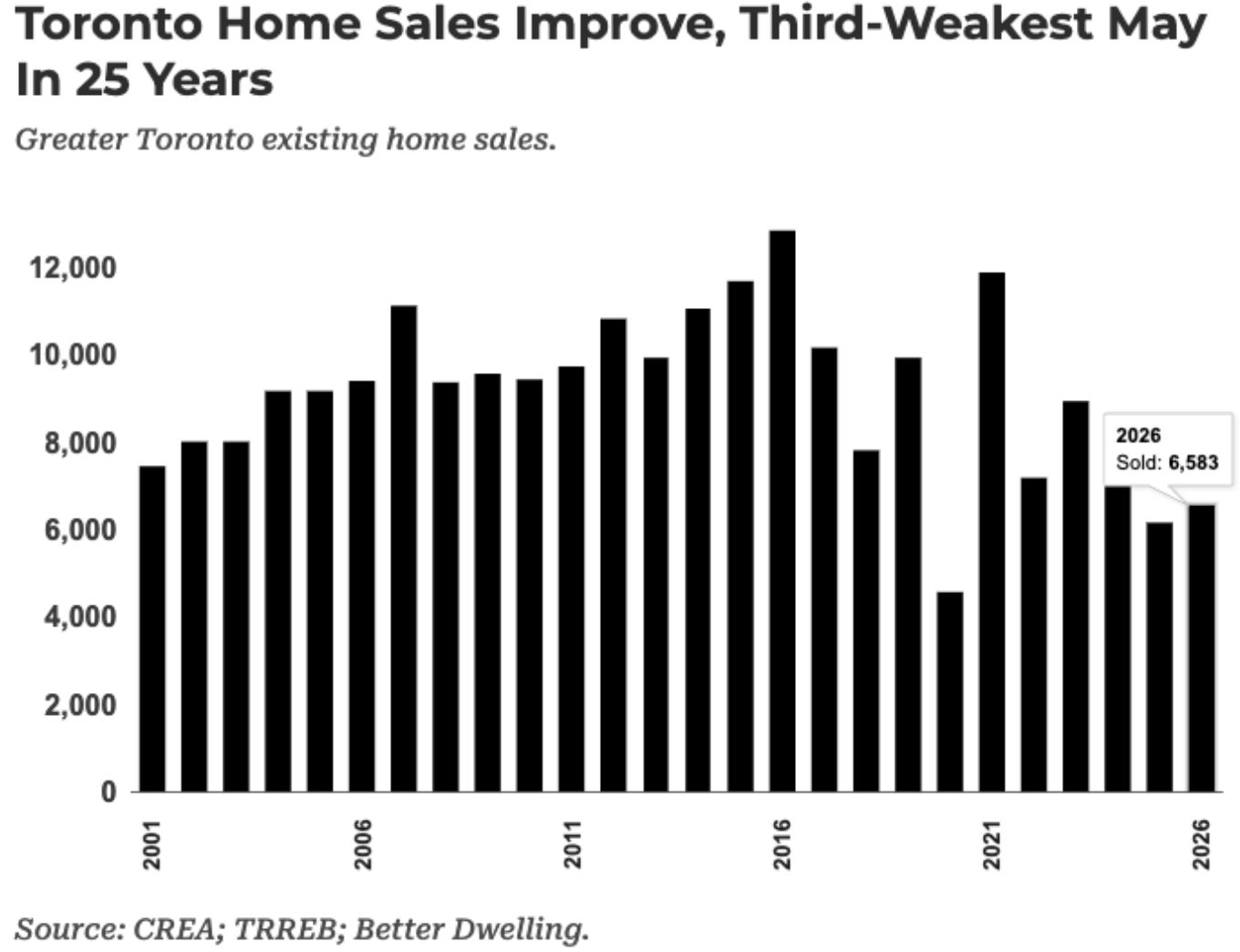
This is the key point: activity improved, but prices are still lower. That tells us buyers are returning selectively, not emotionally. Standing inventory has been absorbed in some neighbourhoods, and competition has likely increased in pockets, but the broader market still reflects caution. Buyers continue to watch job security, inflation, mortgage rates, and overall confidence before making major commitments.
Part of the recent improvement in transaction activity may also reflect buyers responding to government incentives and concerns about future borrowing costs. The federal government's GST/HST rebate for first-time homebuyers purchasing newly constructed homes has improved affordability at the margin and created additional urgency among eligible purchasers. For many buyers, the rebate represents one of the first meaningful demand-side incentives introduced during the current housing correction. The HST boost led to nearly fourfold increase in Toronto-area new single-family home sales in May.
At the same time, financial markets have begun pricing-in the possibility that borrowing costs could move higher in the future. While the Bank of Canada remains cautious, concerns surrounding energy-driven inflation, trade uncertainty, supply chain disruptions, and a weaker Canadian dollar have shifted expectations away from aggressive rate cuts. Some buyers appear increasingly concerned that today's mortgage rates may prove more attractive than those available twelve to twenty-four months from now.
The combination of government incentives and uncertainty surrounding future financing costs may be pulling demand forward. Rather than waiting for additional price declines, some purchasers are choosing to secure properties today while incentives remain available and financing conditions remain relatively stable. This dynamic does not necessarily signal the beginning of a sustained housing recovery, but it may help explain why transaction activity has improved despite ongoing affordability challenges and broader economic uncertainty.
The market continues to be shaped by affordability. Lower prices have helped somewhat, but they have not solved the problem. Ownership costs remain high relative to income, and mortgage qualification continues to limit purchasing power. This is especially true for younger households and first-time buyers, many of whom remain caught between expensive rents and even more expensive ownership.
For sellers, the market is not dead, but pricing discipline matters. Properties that are priced correctly are moving. Properties that are testing yesterday's values are sitting longer. For buyers, negotiating power still exists, but it is becoming increasingly submarket-specific. The best opportunities may be found in segments where inventory remains elevated, such as certain condo-heavy nodes or properties requiring capital improvements.
For investors, the resale market continues to send a mixed message. Price correction has created better entry points, but rent softness, higher financing costs, and weak near-term appreciation expectations make speculative buying less attractive. The math must work from day one.
Bottom Line: The GTA housing market is tightening at the margins, but it is not recovering broadly. This remains a cautious, selective, negotiation-driven market. Improved sales activity appears to be driven in part by demand being pulled forward through government incentives and concerns over future borrowing costs. Confidence is improving, but affordability remains the gatekeeper.
2.2 Multifamily Rental Market
The multifamily sector is shifting from rapid growth to a more balanced and complex phase. Short-term conditions are softening, but long-term fundamentals remain intact.
Rental Fundamentals
Vacancy has increased as new supply enters the market and population growth slows. Immigration levels have moderated, and the outflow of temporary residents is reducing rental demand. This is most visible in downtown Toronto and areas near post-secondary institutions.
Rents are adjusting downward after several years of strong growth. National rents have declined for more than a year, and Toronto has seen notable year-over-year decreases. Lease-up periods are longer, and incentives have returned in some buildings.
The market is now split. New tenants have more choice, especially in higher-priced buildings and condo-heavy submarkets. Landlords are using incentives, including free rent, parking discounts, move-in credits, and other concessions, to protect occupancy. At the same time, older stabilized buildings and family-sized units remain relatively tight, and occupied rents continue to rise where turnover allows.
While the short-term environment has softened, vacancy remains low by long-term historical standards. Demand from newcomers, students, and households priced out of ownership continues to support occupancy across much of the region. The market is no longer experiencing the acute shortages observed in recent years, but it has not entered a state of structural oversupply.
Rental Rate Trends
After several years of rapid increases, rents are now adjusting downward. Slower immigration, reduced international student volumes, and a growing inventory of newly completed units have shifted negotiating leverage back toward renters.
Recent rental data indicates that asking rents across Toronto have declined year-over-year, particularly within newer downtown developments and investor-owned condominium inventory. Lease-up periods have lengthened, incentives have reappeared, and landlords are competing more aggressively for qualified tenants.
This moderation reflects both affordability constraints and a healthier balance between supply and demand. While rent growth has slowed significantly, the longer-term need for rental housing remains substantial.
Development Pipeline
New supply is peaking at an inopportune time. Projects launched during the 2020–2022 development cycle are now completing into a softer demand environment.
At the same time, the forward pipeline is weakening. Condominium starts have fallen sharply due to weak pre-sales, while many proposed projects are being delayed or cancelled as financing assumptions, construction costs, and projected absorption rates no longer support development feasibility.
This is creating a two-speed dynamic within the market. In the short term, rising vacancies and slower rent growth are creating pressure on owners and developers. In the medium term, declining construction activity may create another supply shortage once population growth and household formation begin to recover.
Purpose-built rental remains more resilient than investor-driven condominium supply, but underwriting assumptions are being recalibrated across the industry.
Government Capital Is Becoming a Major Market Force
A notable trend emerging across Canada's housing market is the growing role of government capital in shaping rental housing outcomes. Historically, governments influenced housing primarily through policy, regulation, and planning. Today, they are increasingly acting as direct financial participants.
Programs such as CMHC's MLI Select continue to provide highly attractive financing terms, including elevated loan-to-cost ratios, extended amortizations, and below-market borrowing costs. In many cases, the economics of purpose-built rental development now depend as much on government-supported financing as they do on private capital markets.
Governments are also becoming more willing to intervene directly when housing markets fail to clear naturally. In British Columbia, the federal and provincial governments recently announced a $3.2 billion initiative designed to acquire unsold condominium inventory and convert units into rental housing. Ontario has proposed a similar strategy, allocating approximately $300 million toward the acquisition of roughly 2,200 unsold condominium units for conversion into rental stock.
Supporters argue these initiatives accelerate rental housing supply and improve affordability without waiting for new construction. Critics contend they transfer development risk from private builders to taxpayers, insulating poorly performing projects from normal market forces and potentially delaying necessary price discovery.
Regardless of one's view, the broader trend is becoming increasingly clear: governments are moving beyond regulation and becoming active participants in housing markets. For investors, this introduces both opportunities and risks. Access to subsidized financing continues to support purpose-built rental development, while government intervention may influence future pricing dynamics, supply levels, and investment returns in ways that were far less common during previous market cycles.
Investment Activity and Cap Rates
The investment landscape is shifting from growth to discipline, while government capital is becoming an increasingly important influence on how rental housing is financed, developed, and absorbed.
Cap rates remain elevated relative to the ultra-low interest rate environment that defined the previous cycle. Transaction activity has stabilized but remains below historical peak levels as buyers and sellers continue to adjust expectations around value and financing.
Institutional investors remain active buyers of stabilized rental product, while private capital continues pursuing value-add opportunities in older apartment stock. Investors are increasingly focused on operational efficiency, tenant retention, capital expenditure management, and realistic underwriting assumptions.
Financing remains a critical consideration. Debt coverage requirements are tighter, lenders are more selective, and growth assumptions are being scrutinized more closely than at any point in the last decade.
Multifamily remains one of the GTA's most durable and institutionally supported asset classes. However, the market has transitioned away from a period where rent growth alone could drive returns. Success now depends on disciplined execution, prudent leverage, operational excellence, and a long-term investment horizon.
Bottom Line
The multifamily market is transitioning from a period of acute shortage to one of normalization. Short-term softness in rents and occupancy is being driven by slower population growth and a wave of new supply. At the same time, declining development activity is laying the foundation for future supply constraints.
Government financing programs and direct market intervention are becoming increasingly influential forces within the housing ecosystem. Investors must now account not only for traditional market fundamentals, but also for the growing role of public-sector capital in shaping future outcomes.
The long-term investment thesis remains intact. Housing affordability challenges persist, homeownership remains out of reach for many households, and rental demand continues to be supported by demographic and economic realities. The cycle has not broken—it has simply entered a new phase requiring greater discipline, patience, and strategic execution.
2.3 Office Market
The office market continues to recover, but only in the spaces tenants actually want. The broad story is still a shortage inside a surplus. Premium, transit-connected, amenity-rich space is tightening, while older and less competitive buildings continue to face weak demand.
The phrase "flight-to-quality" has become standard language among Toronto commercial brokers and investors, but the concept deserves clear explanation. Businesses emerging from pandemic disruptions are rethinking what office space should accomplish. Simply providing desks and meeting rooms no longer suffices — companies want spaces that attract talent, facilitate collaboration, and reflect positively on their brand.This thinking drives tenants toward Class A and Trophy buildings that offer amenities and environments most older properties cannot match. A Trophy building in Toronto's core typically features:
Floor-to-Ceiling Windows
Fitness Centres & Showers
High-End Lobby Experience
Collaborative Work Lounges & Conference Meeting Centres
Outdoor Terraces
Direct PATH / Subway Access
Professional Coffee Service
Natural Light & City Views
These features matter because companies are competing for talent.The buildings benefiting most from this trend are concentrated in specific Toronto locations: Bay Street towers with recent renovations and newer developments in the South Core near Union Station for examples.
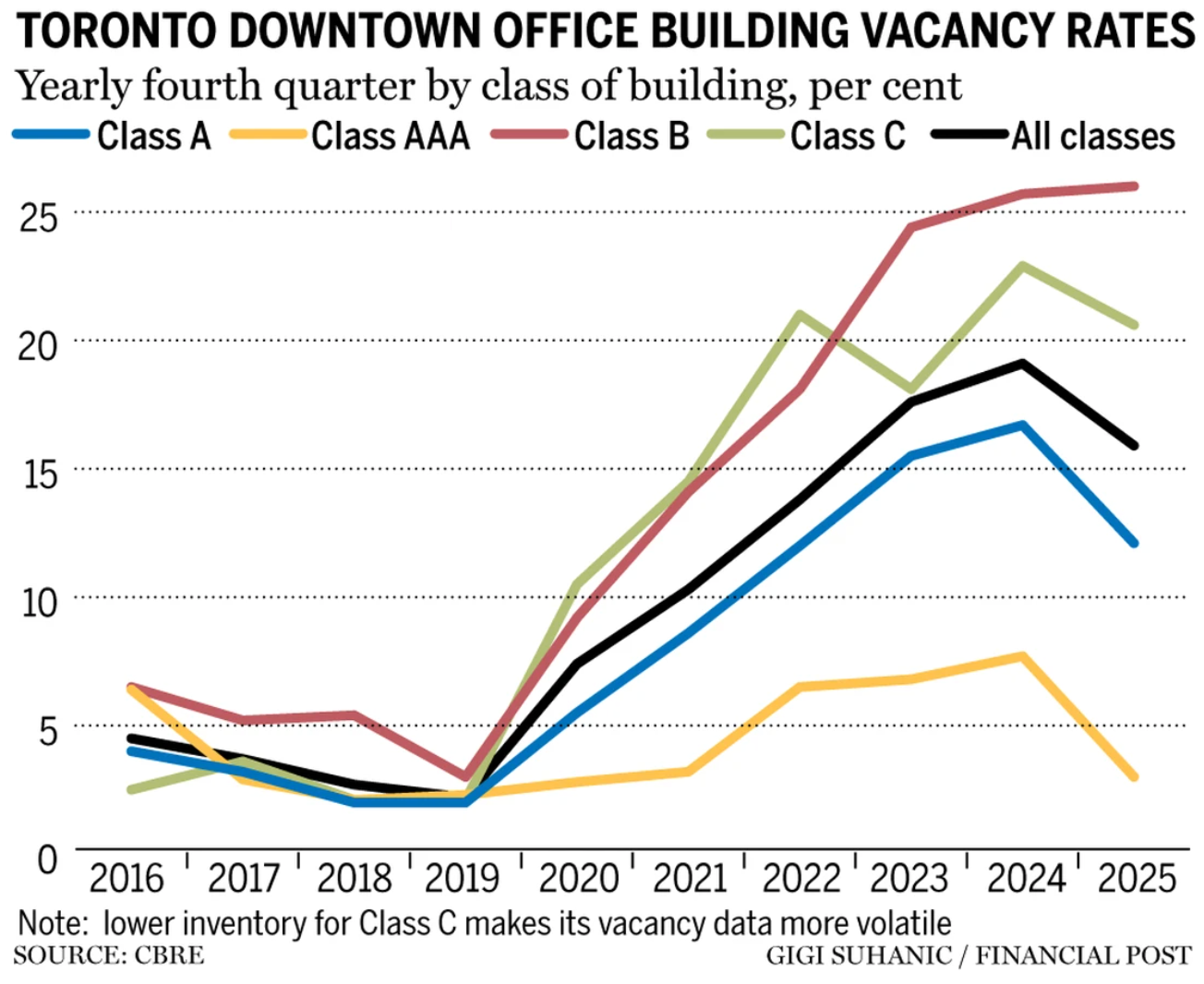
The latest national office data showed Toronto’s downtown office market continued to improve in Q1 2026, with downtown vacancy falling to 14.4%. That marked the third consecutive quarter in which vacancy declined by more than 100 basis points. Toronto also recorded more than 1.0 million square feet of net absorption in each of the last three quarters, reinforcing its role as the main driver of national office recovery.
This recovery is being supported by return-to-office mandates, especially among financial services, professional services, and public-sector employers. Office utilization has stabilized, and employers are becoming clearer about how often staff are expected to be physically present. That clarity is helping tenants make decisions again.
However, this is not a return to the pre-pandemic office market. Many companies still want flexibility, and shorter lease terms remain common as occupiers avoid locking into more space than they may need. Hybrid work is no longer an experiment. It is part of the operating model.
For landlords, quality and reinvestment matter more than ever. Buildings with strong transit access, modern amenities, upgraded common areas, and better employee experience are capturing demand. Older buildings without a clear repositioning strategy are increasingly forced to compete through discounted rents, turnkey improvements, and flexible terms.
For tenant-occupiers, the current market still offers leverage outside the best assets. For investors, office is becoming investable again, but only selectively. The opportunity is not “office” as a broad category. The opportunity is quality office bought at the right basis, with a realistic view of leasing costs and tenant expectations.
Bottom line: Office is no longer in freefall. It is recovering selectively. The winners are buildings worth commuting to.
2.4 Industrial Market
The GTA industrial market remains in a rebalancing phase. After several years of rapid rent growth, limited availability, and aggressive leasing, the market has cooled into a more normal environment. Tenants have more choice than they did during the peak, but the best functional space is still not easy to replace.
The key change since our last edition is sentiment. Tenants that delayed decisions through 2024 and 2025 are becoming more active again, but they are not chasing space at any cost. They are looking for buildings that improve efficiency, reduce transportation friction, and support today’s operating requirements. Clear height, shipping functionality, yard depth, power capacity, and access to labour remain central to decision-making.
Availability remains elevated compared with the ultra-tight years, and asking rents are still below peak levels. That gives tenants with lease expiries over the next 6 to 24 months a window to negotiate. However, this window is not unlimited. Functional product in core markets remains scarce, and landlords are already more focused on occupancy and retention than aggressive rent cuts.
For example, Oxford Properties has fully leased all 1.55 million square feet of space across four speculatively constructed buildings of the first phase at James Snow Business Park in Milton, Ont. ID Logistics Canada, a third-party logistics provider, has leased all 1.09 million square feet at the park’s largest building at 10725 Louis St. Laurent Ave. This represents the largest-ever speculative industrial lease in Canada and one of the largest industrial leases on record in the country.
Demand remains anchored by logistics, distribution, e-commerce, manufacturing, food, pharmaceuticals, and consumer goods. There is also a growing trend of non-traditional users exploring industrial space, including recreation, fitness, institutional, and community uses where zoning permits.
For owner-users, the small-bay and strata market remains attractive, particularly for businesses that want control over occupancy costs and long-term location security. For investors, industrial still offers strong long-term fundamentals, but underwriting must reflect slower rent growth and more competitive leasing conditions.
Bottom line: Industrial is no longer overheated, but it remains fundamentally strong. Tenants have leverage today, while owners of well-located, functional product should remain confident over the long term.
2.5 Retail Market
Retail continues to be one of the more resilient property types in the GTA, but the consumer story is becoming more complicated. Canadian retail sales rose for a fifth consecutive month in April, increasing 0.5% to approximately $73.03 billion, helped by higher gasoline prices. However, core retail sales excluding gas and auto declined 0.7%, showing that headline spending is not the same as healthy volume growth. (Wall Street Journal)
This distinction matters. Consumers are still spending, but part of that spending reflects higher prices rather than stronger demand. Food, fuel, and basic necessities are taking a larger share of household budgets. That supports grocery, pharmacy, discount, and daily-needs retail, but it leaves less room for discretionary categories.
Consumer behaviour is also beginning to reflect growing financial strain beneath the surface. Recent research by Harris & Partners found that many Canadians reported feeling the effects of a recession well before economists formally confirmed a slowdown in economic activity. Households continue to face elevated housing costs, higher debt-servicing obligations, and rising everyday expenses, causing many consumers to become increasingly selective with discretionary purchases.
The result is a widening gap between necessity spending and discretionary spending. Consumers continue to spend on groceries, pharmacy products, fuel, healthcare, and essential services, while purchases tied to apparel, home furnishings, renovations, and other discretionary categories remain under pressure. This helps explain why many retail landlords continue to see strong demand from necessity-based tenants while retailers dependent on discretionary consumer spending face a more challenging operating environment.
Retail real estate fundamentals remain strong because supply is tight. New development remains difficult due to construction costs, land constraints, and municipal cost burdens. Retailers that want to grow are competing for limited quality space, especially in grocery-anchored plazas, high-street locations, and dense suburban nodes.
The strongest retail locations are no longer just places to shop. They are convenience hubs. They combine grocery, medical, fitness, food service, personal care, and essential errands. Walkability, parking, visibility, and tenant mix all matter. Retail that saves people time is outperforming retail that relies only on browsing.
For landlords, this is still a landlord-favourable market in good locations. For tenants, it means site selection needs to be disciplined. Paying more rent may be justified in a location that produces repeat visits and strong conversion. Paying less rent in a weak node may not be a bargain.
For investors, necessity-based retail remains attractive because income durability is valuable in uncertain markets. However, discretionary-heavy retail requires more caution as household budgets tighten.
Bottom line: Retail remains steady, but not all spending is healthy spending. The strongest assets are those tied to daily needs, convenience, and resilient consumer behaviour.
3. Commercial Real Estate Investor Perspective
Investment activity in the GTA remains cautious but active. The latest reported Q1 2026 data showed nearly $3.8 billion in GTA commercial real estate transaction volume, down only 3% year-over-year. That is not a boom, but it does suggest the market has found a more stable footing after the reset in values and financing costs. (Altus Group)
The sector mix is important. Retail investment volume declined 66% year-over-year to approximately $314 million, largely because owners of high-quality retail assets have little reason to sell. Multifamily moved in the opposite direction, with nearly $675 million transacted, up 232% year-over-year. Office recorded about $485 million in volume, up 103%, while industrial posted approximately $1.5 billion, up 11%. Land remained weaker, with nearly $796 million transacted, down 29%. (Altus Group)
This tells a clear story. Investors are not avoiding real estate. They are avoiding uncertainty. Capital is flowing toward assets with durable income, financing support, replacement-cost protection, and long-term relevance. Multifamily still benefits from housing affordability pressure. Industrial still benefits from logistics and supply-chain demand. Necessity retail still benefits from daily consumer needs. Premium office is regaining credibility where leasing momentum is visible.
Land remains the most difficult category because it depends heavily on future assumptions. Construction costs, development charges, financing conditions, presale weakness, planning timelines, and market absorption all create risk. Developers are not gone, but they are more cautious.
For private investors, this is a market where patience matters. The best opportunities are unlikely to come from chasing broad market momentum. They are more likely to come from pricing dislocations, motivated sellers, mismanaged assets, owner-user opportunities, and properties where operational improvement can create value.
Bottom line: Capital is returning, but it is not careless. The market is rewarding investors who can distinguish between temporary weakness and permanent impairment.
4. Going Forward – 2026
The second half of 2026 is setting up as a test of discipline. The economy is not collapsing, but it is not strong enough to absorb every shock easily. Labour conditions improved in May, but unemployment remains above pre-pandemic norms. Inflation has reappeared as a risk. The Bank of Canada is on hold. Fixed-rate financing is volatile.
For tenant-occupiers, this is a planning window. Tenants with lease expiries in the next 6 to 24 months should not wait passively. Office and industrial users may still have leverage in the right buildings, but the best spaces will not remain discounted forever. Retail tenants need to be careful, because strong locations remain competitive and expensive.
For owner-users, the market may offer opportunities to buy at a better basis than during the peak. Industrial condos, small-bay properties, and select commercial assets may provide long-term control over occupancy costs. However, borrowing assumptions must be tested carefully.
For investors, the next phase will not be driven by cheap debt or automatic appreciation. It will be driven by income quality, operating skill, tenant durability, and basis discipline. Multifamily, necessity retail, functional industrial, and select premium office remain the most credible areas of focus. Land and development opportunities may become attractive, but only where the numbers work under today’s costs and timelines.
The broader message is simple. Real estate is moving from a momentum market to a judgment market. The winners will not be the ones who guess correctly on rates. They will be the ones who understand risk, protect downside, and buy or lease assets that still make sense under stress.
The best decision-makers do not guess. If you are leasing, relocating, buying, investing, or refinancing this year, the numbers should be pressure-tested before you commit. Real estate is a long game. The right deal must work on paper and in real life.
Paramount represents tenants, buyers, and investors only (no conflicts of interest). The goal is simple: protect your downside, strengthen your position, and help you secure the right property at the right basis. Reach out when you’re ready.
Go on, entrepreneur — be great.
Mel


Copyright 2023. All rights reserved
Copyright 2023. All rights reserved
Follow